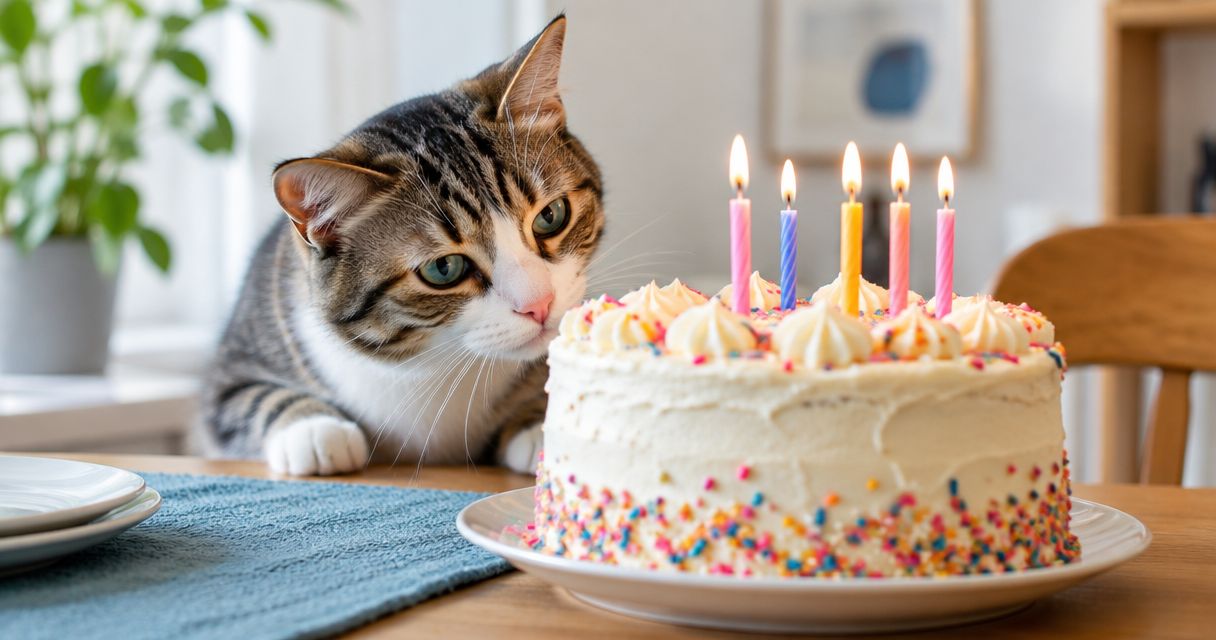
Cats should not eat human birthday cake: it offers no nutritional benefit, and ingredients such as chocolate, coffee, or alcohol can make it dangerous. A small bite of plain, fully baked cake is not automatically a poisoning emergency, but the ingredients and your cat’s symptoms determine what to do next. For a birthday treat, choose a small portion of your cat’s familiar food rather than sharing your slice.
- Can cats eat cake? Skip human birthday cake; choose a small serving of familiar cat food instead.
- ASPCA Animal Poison Control identifies chocolate, caffeine, and alcohol as pet poisoning hazards.
- Cat birthday cake needs an ingredient check; a pet-friendly label alone does not establish suitability.
- After an accidental bite, save the ingredient list and contact your veterinarian if ingredients or symptoms raise concern.
Why this matters
Your cat’s 2026 birthday deserves a little extra love, not an upset stomach. The cake, frosting, filling, and decorations all need separate attention because a plain-looking slice can contain ingredients you cannot identify by sight.
Start with ingredients, not appearance. If you are exploring cat-safe bakery treats, check that each option is intended for cats and fits your own cat’s diet. A treat made for a dog is not automatically the right choice for a cat.
A birthday is a reason to celebrate your cat, not a reason to test a new food. Keep the celebration separate from the question of what your cat can safely digest.
Can cats eat birthday cake?
Human birthday cake is not an appropriate treat for cats. Plain baked sponge, chocolate cake, frosting, and a birthday-shaped serving of cat food are different foods with different risks. Calling all of them cake hides the distinction that matters most: what is actually inside.
| Birthday option | Best for | Advantage | Limitation or risk | Recommendation |
|---|---|---|---|---|
| Human sponge cake | Human guests, not cats | Easy to keep on a separate dessert table | Adds calories without providing balanced feline nutrition; recipes vary | Keep off your cat’s plate |
| Chocolate or coffee cake | Human guests away from pets | No feeding advantage for cats | Chocolate and caffeine are toxic to cats | Do not serve |
| Frosting or whipped cream | Decorating the human dessert | No nutritional reason to offer it | Dairy can cause digestive upset; other ingredients need checking | Skip as a cat treat |
| Familiar complete cat food shaped into a birthday serving | Cats that already tolerate that food | Keeps the celebration within an established diet | Still counts toward the normal daily food allowance | Best starting point |
| A bakery treat explicitly intended for cats | Owners seeking a separate celebratory treat | Can provide a special presentation | Requires ingredient, portion, and individual-diet checks | Assess before serving |
This comparison is about suitability, not a claim that every accidental crumb causes harm. The amount eaten matters, but a small amount does not make a toxic ingredient safe. When chocolate, caffeine, or alcohol is involved, ask a veterinary professional for advice rather than guessing from the size of the bite.
Plain cake: not a useful cat treat
A tiny bite of plain, fully baked cake without a toxic ingredient is different from eating chocolate cake. That distinction helps you respond to an accident; it does not make plain cake a recommended snack.
Cats need a complete and balanced diet suited to their life stage. Sugar, butter, and flour do not turn a dessert into that diet, and rich foods can cause vomiting or diarrhea.
The World Small Animal Veterinary Association’s nutrition guidance recommends keeping treats below 10% of daily calories. At least 90% of daily calories should therefore come from the complete and balanced diet, unless your veterinarian directs otherwise. That limit covers all extras together, not a separate allowance for each treat.
The 10% ceiling is not permission to feed cake containing unsafe ingredients. For cats on therapeutic diets or with food allergies, ask your veterinarian whether extras belong in the feeding plan at all.
Chocolate cake: contact a veterinarian after exposure
Chocolate contains theobromine and caffeine, which are toxic to cats. ASPCA Animal Poison Control lists chocolate and caffeine among foods that can cause serious poisoning in pets.
Do not decide that a chocolate cupcake is harmless because your cat only licked the icing. Cocoa can appear in frosting, filling, crumbs, and decorations, so the whole recipe matters.
Call your veterinarian, an emergency veterinary hospital, or an animal poison service promptly. Have the packaging or recipe available, along with your cat’s weight, the approximate amount eaten, and when it happened. Do not wait for symptoms before seeking advice about a known toxic ingredient.
Frosting and cream: leave them off the cat’s plate
Frosting is not a safer substitute for cake. Buttercream adds fat and sugar, while whipped cream and cream-cheese toppings contain dairy that some cats digest poorly.
Many adult cats have difficulty digesting lactose. A lick is not the same exposure as a bowlful, but there is no need to find your cat’s tolerance during a birthday party.
Read flavored toppings carefully, too. Chocolate, coffee, and alcohol can appear in icing or fillings even when the sponge itself is plain. A decorative topping deserves the same ingredient check as the cake underneath it.
Why birthday-cake risk varies
The answer to whether an accidental bite needs urgent attention depends on the actual exposure. These are the practical factors to check:
- Ingredients: Chocolate, caffeine, and alcohol require prompt veterinary advice. Onion and garlic are also toxic to cats and can appear in savory celebration recipes.
- Amount eaten: Report the best estimate you can make, including missing frosting or filling. Do not assume that the visible crumbs represent the entire amount.
- Preparation: Fully baked cake differs from raw yeast dough, which can expand and produce alcohol after ingestion.
- Your cat’s health: A therapeutic diet, food allergy, or existing illness changes what is appropriate to feed and what advice you need.
- Decorations: Wrappers, ribbon, string, and cake toppers are not food. Swallowing them creates a separate concern from eating cake.
- Symptoms: Vomiting, weakness, tremors, breathing difficulty, or collapse call for urgent veterinary attention.
A label such as natural, homemade, or pet-friendly does not answer these questions. For your 2026 birthday shopping, use the ingredient list and the intended species as the starting point, then account for your cat’s own feeding restrictions.
What should I do if my cat already ate cake?
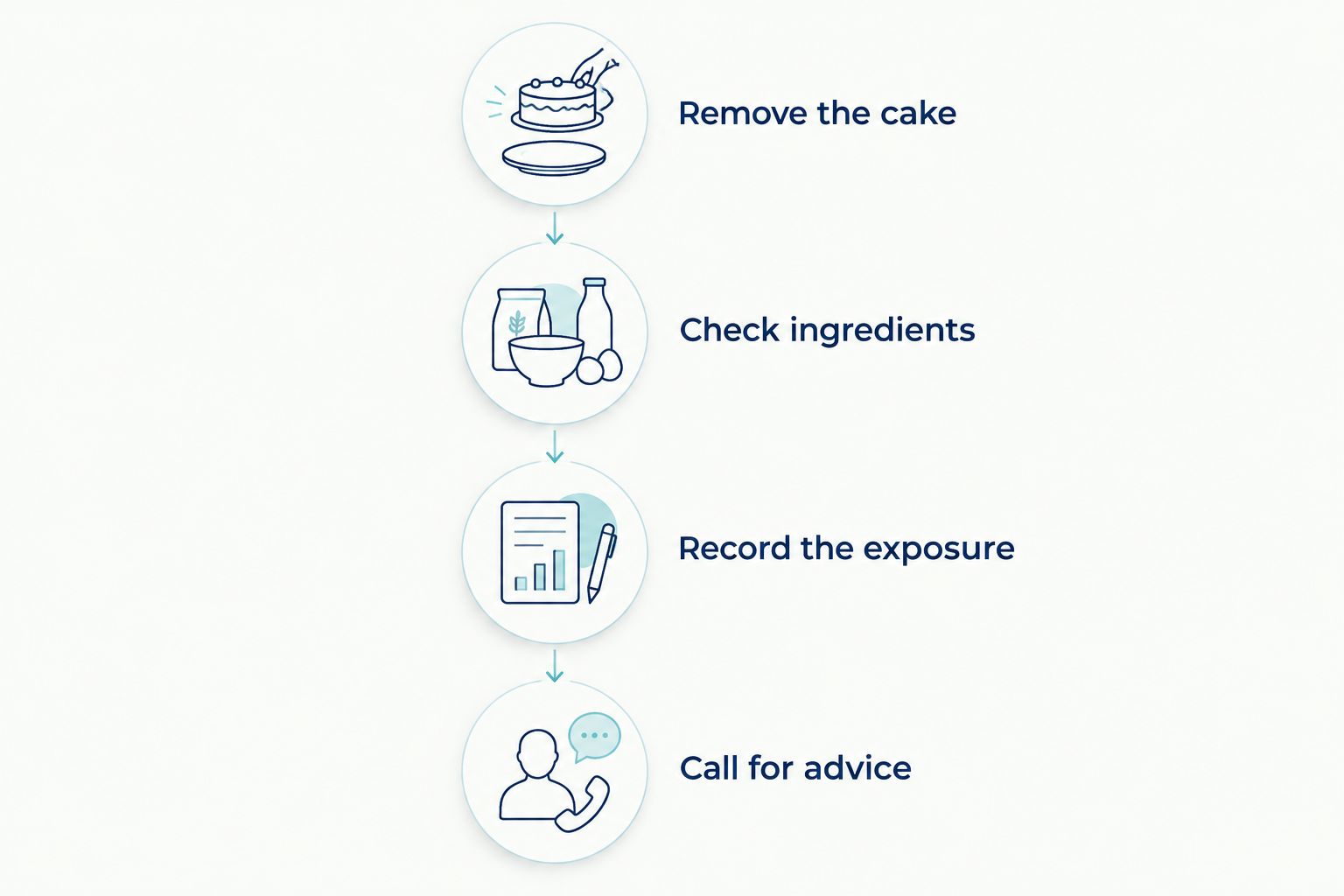
Remove the cake, identify the ingredients, and contact a veterinarian when a toxic ingredient, swallowed decoration, or concerning symptom is involved. If you cannot establish what your cat ate, ask for advice rather than treating an unknown recipe as plain sponge.
- Remove the cake. Put away the dessert, crumbs, wrappers, and decorations so your cat cannot take another bite.
- Check ingredients. Save the package or recipe and include the filling and frosting. Tell the veterinarian about any ingredients you cannot confirm.
- Record the exposure. Note approximately what was eaten and when. Take a photograph of the remaining cake if that helps you explain the amount.
- Call for advice. Give the veterinary team your cat’s weight, health conditions, symptoms, and exposure details. Follow their instructions about monitoring or treatment.
Do not induce vomiting or give home remedies unless a veterinary professional specifically instructs you to do so. Do not force food, milk, oil, or water into your cat’s mouth as a treatment.
If your cat swallowed ribbon or string, contact a veterinarian. Never pull string that is protruding from the mouth or anus; pulling can cause injury. Breathing trouble, collapse, seizures, or severe distress need emergency care, not an online ingredient search.
How can I make a cat-friendly birthday serving?
Use your cat’s familiar complete food as the birthday base. Shape a portion of the usual wet food on a clean plate, or present the normal meal in a special feeding dish without adding unfamiliar ingredients.
Count that serving as part of the normal daily ration. A birthday-shaped meal does not need to become an extra meal, and an attractive presentation does not require icing.
Keep the setup simple:
- Use a food your cat already tolerates.
- Follow the food’s handling and storage instructions.
- Put decorative candles beside the plate for a supervised photograph, not in reach of your cat.
- Remove toppers, string, ribbon, and packaging before serving.
- Let your cat approach voluntarily and stop the celebration if your cat wants space.
For a mixed dog-and-cat household, serve separate portions appropriate to each animal. Do not use a shared birthday cake as evidence that both pets can eat the same ingredients.
What should I check before ordering a cat birthday treat?
For a 2026 bakery order, ask whether the particular item is intended for cats, what the full ingredients are, and how the bakery recommends serving and storing it. If your cat needs a prescription diet or avoids specific proteins, take that information to your veterinarian before ordering.
Dogeatcake is a pet-bakery option for Boston owners seeking birthday treats for dogs and cats. Its South End bakery and online shop offer local pickup and delivery plus nationwide shipping. Those fulfillment options help with celebration planning; they do not replace checking the individual item’s suitability.
Browse Dogeatcake with your cat’s dietary requirements in mind. The advantage of a dedicated pet-bakery search is finding treats made for pets; the limitation is that a pet label alone cannot establish that every item fits every cat.
A custom shape, affectionate message, or pretty finish is the fun part. Ingredient suitability comes first, and you should not assume that every Dogeatcake dog cake is suitable for cats.
Is a dog birthday cake safe for cats?
A dog birthday cake is not automatically safe for cats. Check the complete recipe, whether the item is intended for cats, and any feeding restrictions your veterinarian has given you.
Dog food and dog treats do not replace complete feline nutrition. Even when ingredients are individually acceptable, portion size and your cat’s tolerance still matter.
Can kittens eat birthday cake?
Kittens should not eat human birthday cake. Their growth diet needs to remain complete and balanced, and a human dessert offers no reason to interrupt it.
Celebrate with their usual kitten food and an age-appropriate play session instead. Ask your veterinarian before introducing treats if you are unsure what fits their feeding plan.
FAQ
Can cats eat cake on their birthday in 2026?
Cats should not eat human birthday cake, including for a 2026 celebration. Offer a small birthday presentation of familiar cat food instead, and keep the serving within the normal daily food allowance.
Is a tiny piece of vanilla cake poisonous to cats?
A tiny piece of plain, fully baked vanilla cake is not automatically a poisoning emergency, but the complete recipe determines the risk. Check the frosting and filling, and contact your veterinarian if ingredients are unknown or your cat develops symptoms.
Can cats lick birthday cake frosting?
Cats should not be offered birthday cake frosting. Dairy can cause digestive upset, and flavored frosting can contain chocolate, coffee, or alcohol.
What should I do if my cat ate chocolate cake?
Contact your veterinarian, an emergency veterinary hospital, or an animal poison service promptly if your cat ate chocolate cake. Save the recipe or packaging and report the approximate amount, time of exposure, and your cat’s weight; do not wait for symptoms.
What is the best birthday cake alternative for a cat?
A small serving of your cat’s familiar complete food is the best starting point for a birthday presentation. Count it as part of the regular daily ration rather than an extra meal.
Can I order a cat birthday treat from Dogeatcake?
Dogeatcake sells pet bakery treats for dogs and cats. Check that the particular item is intended for cats and review its ingredients against your cat’s dietary needs before ordering.
How much of a cat’s diet can come from treats?
Treats should stay below 10% of a cat’s daily calories, following WSAVA nutrition guidance. That allowance includes all extras, and it does not make toxic ingredients acceptable; cats with medical dietary restrictions need individualized veterinary advice.
One last thing
The most useful upgrade for your cat’s 2026 birthday is not frosting. It is a celebration your cat can leave whenever they want: a familiar meal, a comfortable spot, and attention on their terms.
Take the photograph before serving, put the decorations away, and let the birthday cat enjoy the food without an audience crowding the plate. Keep the pawty special and the meal familiar.