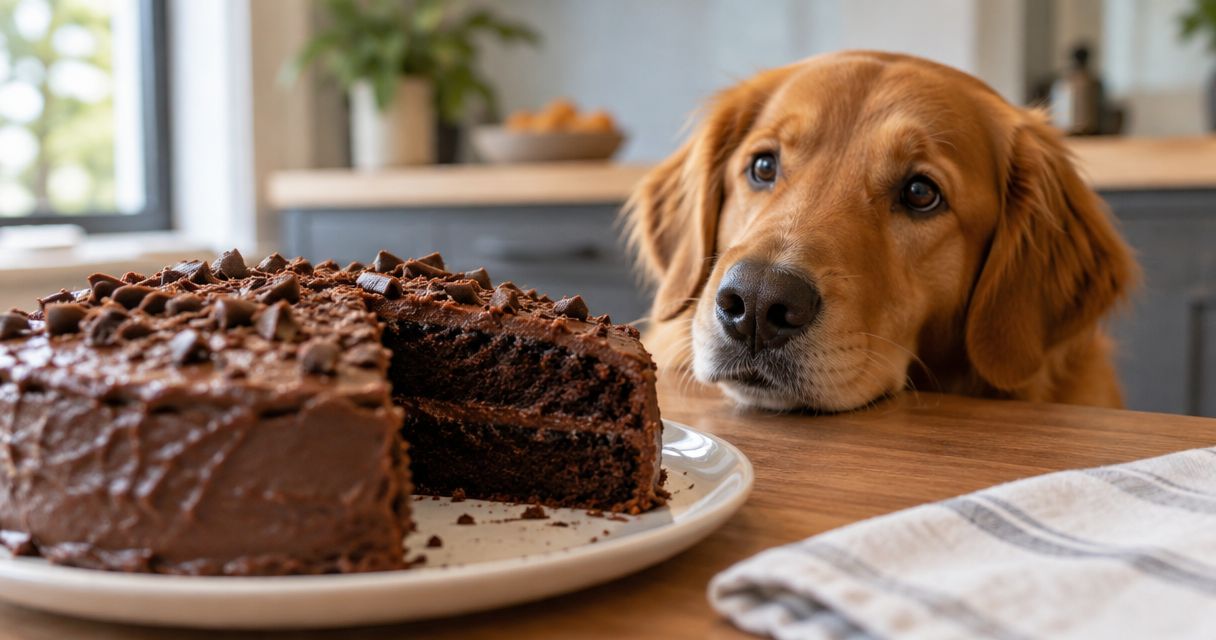
No, dogs should not eat chocolate cake: chocolate contains theobromine and caffeine, which are toxic to dogs. If your dog has eaten chocolate cake, contact your veterinarian or an animal poison-control service immediately, even if your dog seems fine. The risk depends on your dog’s weight, the amount eaten, and the ingredients; frosting, fillings, and sweeteners can add separate hazards.
- Can dogs eat chocolate cake? No. Call your veterinarian after an accidental bite; do not wait for symptoms.
- The Merck Veterinary Manual identifies theobromine and caffeine as the toxic substances in chocolate.
- Save the recipe or packaging, estimate the missing cake, and report your dog’s weight.
- Choose a dog-specific celebration treat after checking every ingredient and your dog’s dietary needs.
Why this matters
A stolen slice calls for a phone call, not a wait-and-see approach. You cannot judge the chocolate dose from a cake’s color, sweetness, or slice size, and a dog that looks comfortable immediately after eating it can still need treatment.
For celebrations in 2026, separate the human dessert from your dog’s treat before guests arrive. Our guide to whether dogs can eat cake explains the broader ingredient question; chocolate cake requires immediate attention after an accidental ingestion.
Can dogs eat chocolate cake?
Chocolate cake is not a safe treat for dogs, including as an occasional birthday bite. Baking does not make chocolate safe, and removing the frosting does not remove cocoa already mixed into the sponge.
The Merck Veterinary Manual’s guidance on chocolate toxicosis explains that dogs can develop digestive, cardiovascular, and neurological signs after exposure to chocolate’s methylxanthines. The amount of those compounds varies with the chocolate ingredient, so there is no universal safe size of chocolate-cake bite.
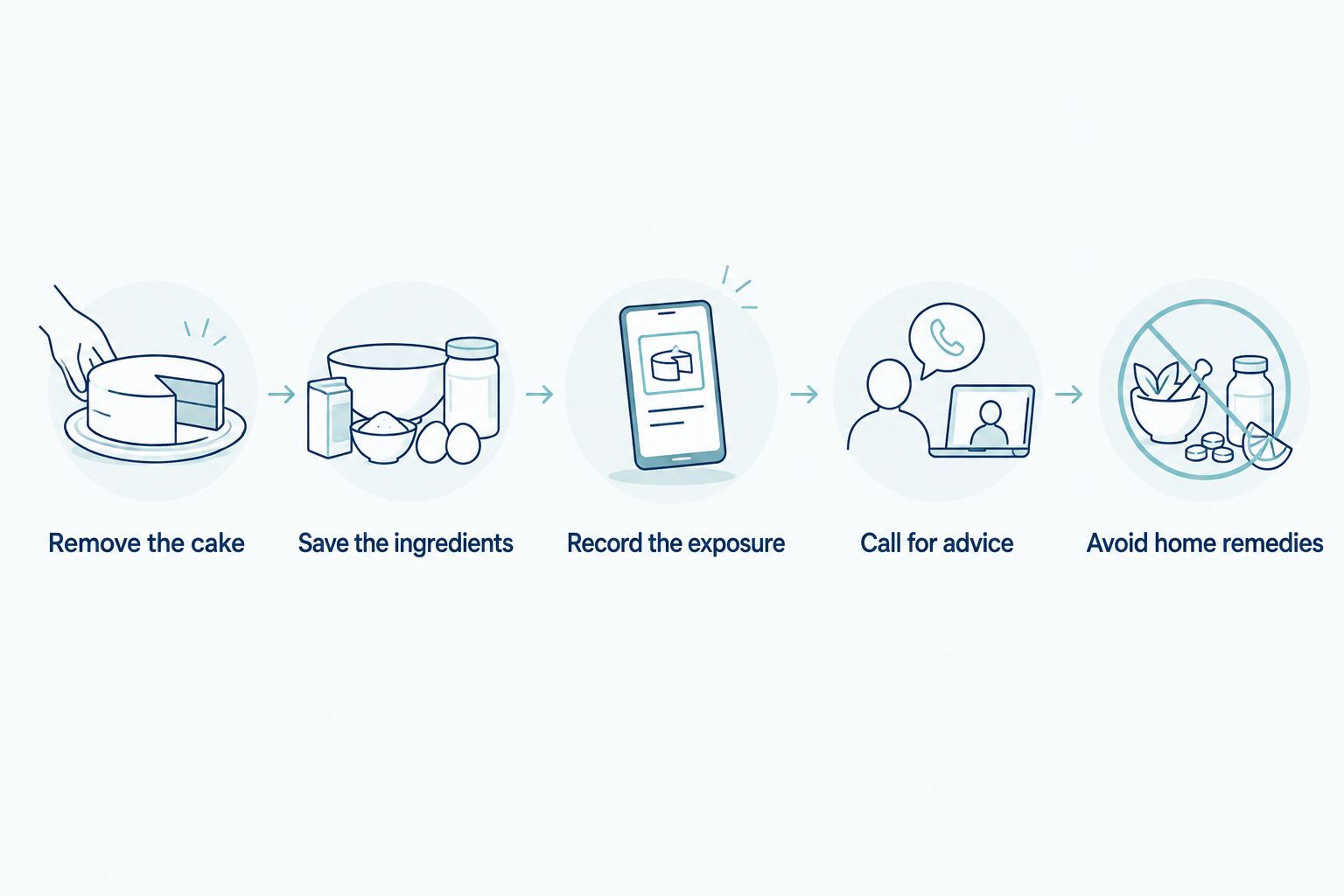
If your dog has already eaten cake, take these steps:
- Remove the cake. Put the remaining dessert, frosting, wrappers, and crumbs somewhere your dog cannot reach. Separate other pets from the area, too.
- Save the ingredients. Keep the packaging, recipe, or a photo of the ingredient list. Include the filling, decorations, and frosting rather than reporting only the sponge.
- Record the exposure. Note when it happened, how much appears missing, and your dog’s current weight. Tell the veterinarian when those details are uncertain.
- Call for advice. Contact your veterinarian, an emergency veterinary hospital, or an animal poison-control service. Explain any symptoms and follow the professional’s instructions.
- Avoid home remedies. Do not induce vomiting or give salt, hydrogen peroxide, activated charcoal, milk, or other treatments unless a veterinary professional specifically directs you.
These steps apply to a 2026 birthday party just as they do to a quiet evening with leftover dessert. Do not delay the call while searching for an exact recipe or weighing every remaining crumb.
What should you tell the veterinarian?
Start with the suspected food, the time eaten, and whether your dog has symptoms. Then provide your dog’s weight, the estimated amount missing, and any information about the chocolate or cocoa used.
Mention medications, existing medical conditions, and any packaging your dog swallowed. A cupcake liner or plastic decoration is a separate concern from the cake itself, so do not leave it out of the conversation.
If you did not see the incident, say so. An honest estimate gives the veterinary team more useful information than a confident guess.
Chocolate sponge: cocoa still counts
Chocolate cake can contain cocoa powder, melted chocolate, chocolate chips, or several chocolate ingredients together. The finished cake’s weight does not tell you how much theobromine your dog consumed.
A thin slice of a cocoa-heavy recipe and a larger piece of a lightly flavored cake are not interchangeable exposures. Your veterinarian needs the recipe details when available, not simply the description “one slice.”
Chocolate frosting and ganache: report them separately
Chocolate frosting, ganache, and fillings contribute to the total exposure. Scraping frosting off a slice does not make chocolate sponge suitable for your dog, and vanilla sponge with chocolate frosting still presents a chocolate concern.
Also report any sweetener listed as xylitol, sometimes described as birch sugar. Xylitol is independently toxic to dogs; a sugar-free label is not a safety reassurance.
White chocolate cake: a different risk, not permission
White chocolate contains far less methylxanthine than cocoa powder or dark chocolate, but that does not make a white chocolate cake an appropriate dog treat. Fat-rich foods can cause digestive upset and can contribute to pancreatitis, and the rest of the recipe still matters.
Check the complete dessert rather than stopping at the words “white chocolate.” A filling, drizzle, sweetener, or decoration can change the assessment.
| Cake or topping | Main concern | Useful information to report | Recommendation |
|---|---|---|---|
| Cocoa-based sponge | Theobromine and caffeine exposure | Cocoa ingredient, recipe, amount missing | Do not feed; seek advice after ingestion |
| Chocolate frosting or ganache | Additional chocolate exposure | Frosting ingredients and amount eaten | Include it in the exposure report |
| White chocolate cake | Fat-rich ingredients and other recipe hazards | Full ingredient list, fillings, and decorations | Do not use it as a dog treat |
| Sugar-free chocolate cake | Chocolate plus possible xylitol | Exact sweetener name | Seek immediate veterinary advice |
This comparison supports your call; it does not determine whether your dog needs treatment. Keep that distinction clear when choosing a celebration dessert in 2026.
Why chocolate-cake poisoning risk varies
A veterinarian assesses the whole exposure rather than treating every stolen bite as identical. These factors explain why advice for another dog is not a reliable guide for yours:
- Chocolate concentration: Cocoa powder and baking chocolate are more concentrated sources of methylxanthines than milk chocolate. A cake’s appearance does not establish its concentration.
- Amount eaten: Report all missing sponge, frosting, filling, chips, and decorations. Do not count only the piece you saw your dog swallow.
- Body weight: The same chocolate exposure delivers a larger dose per unit of body weight to a smaller dog.
- Time since ingestion: Timing affects the veterinary team’s assessment and treatment decisions. Report the earliest and latest possible time when you are unsure.
- Other ingredients: Xylitol, raisins, macadamia nuts, coffee, and alcohol introduce concerns beyond the chocolate itself.
- Your dog’s condition: Symptoms, existing illness, and relevant medical history help the veterinarian decide what to do next.
There is no reliable “crumb rule” that clears every dog after every chocolate-cake exposure. A small amount is not automatically a medical emergency requiring the same treatment as a large amount, but a professional should make that distinction.
What symptoms should you watch for after chocolate cake?
Chocolate poisoning can cause vomiting, diarrhea, restlessness, increased thirst, increased urination, a rapid heartbeat, tremors, and seizures. Severe cases can be life-threatening.
Merck’s chocolate-toxicosis guidance describes signs typically beginning within 6–12 hours after ingestion. That window is not an instruction to monitor at home before calling: a dog can appear normal while the exposure still warrants veterinary action.
For clinical context, Merck describes mild signs at methylxanthine doses around 20 mg/kg and seizures at doses of 60 mg/kg or more. These are reference doses for veterinary assessment, not safe-feeding limits or a way to calculate permission for a bite.
You generally cannot convert a homemade slice into a reliable methylxanthine dose without knowing its chocolate content. Report what happened and let the veterinary team assess it.
When should you go to an emergency veterinarian?
Seizures, collapse, breathing difficulty, or severe tremors require emergency veterinary attention. Call the emergency hospital while arranging transport when possible, and follow its instructions.
Do not put your hands inside the mouth of a dog having a seizure or try to give food or liquid. Keep the surrounding area clear of objects that could cause injury.
For your 2026 emergency plan, save your regular veterinarian’s contact details and the nearest emergency hospital’s details before you need them. An online article cannot examine your dog or rule out poisoning.
Is a tiny bite of chocolate cake safe for a large dog?
A tiny bite does not provide enough information to declare a dog safe. A larger body weight changes the dose calculation, but the recipe, amount, and other ingredients still determine the next step.
Describe the bite to your veterinarian and explain whether the cake contained concentrated cocoa, chocolate frosting, or a sugar substitute. Do not use a previous uneventful incident as evidence that another exposure is harmless.
Can dogs eat chocolate cake without frosting?
No. Chocolate cake without frosting still contains the chocolate or cocoa baked into the sponge, so removing the topping does not remove the underlying risk.
If your dog ate only frosting, report that specifically. The assessment should reflect what your dog actually consumed, not the name of the dessert left on the plate.
What can you give your dog instead of chocolate cake?
For a future celebration, choose a dog-specific treat with a complete ingredient list and a portion suited to your dog. For a dog with a prescribed diet, food allergy, or history of pancreatitis, ask your veterinarian before introducing a birthday dessert.
Dogeatcake is best for owners seeking custom dog birthday cakes from a Boston dog bakery. The bakery offers fresh-baked, all-natural custom cakes, cookies, and treats, with local pickup/delivery and nationwide shipping.
The useful distinction is a cake intended for dogs rather than a shared slice of human chocolate cake. The limitation is equally important: “natural” does not mean suitable for every allergy, medical condition, or prescribed diet.
Before choosing a Dogeatcake dog bakery treat, check the current ingredients and discuss any dietary restrictions. Do not assume a particular flavor, substitution, or recipe is available without confirming it.
| Celebration choice | Best for | Benefit | Limitation |
|---|---|---|---|
| Dog-specific cake | Owners planning a birthday dessert | A celebration treat intended for dogs | Ingredients and portions still need checking |
| Your dog’s usual approved treat | Dogs staying with a familiar food | Avoids introducing a new recipe | Does not provide the cake presentation |
| Human chocolate cake | Human guests only | Keeps the human dessert separate | Toxic chocolate ingredients make it unsuitable for dogs |
For a 2026 pawty, serve the dog’s portion separately and put the human cake away immediately afterward. A clear rule for guests—no shared dessert—helps prevent a well-meant bite from becoming an urgent veterinary call.
FAQ
What should I do if my dog just ate chocolate cake?
Contact your veterinarian, an emergency veterinary hospital, or an animal poison-control service immediately. Save the ingredients, estimate the amount eaten, and report your dog’s weight and the time of ingestion; do not wait for symptoms.
How long after eating chocolate cake will a dog get sick?
Chocolate-poisoning signs typically begin within 6–12 hours, according to the Merck Veterinary Manual. Call for veterinary advice immediately rather than using that window as a reason to wait.
Can one bite of chocolate cake hurt my dog?
One bite cannot be assessed without considering your dog’s weight, the recipe, and the amount eaten. Contact your veterinarian, especially when the chocolate concentration or other ingredients are uncertain.
Should I make my dog vomit after eating chocolate cake?
Do not make your dog vomit unless a veterinary professional specifically instructs you to do so. Home treatment can create additional risks and delay appropriate care.
Is white chocolate cake safe for dogs?
White chocolate cake is not an appropriate dog treat. Although white chocolate contains far less methylxanthine, fat-rich ingredients and other recipe hazards still need assessment after an accidental ingestion.
Can my dog have chocolate-flavored cake made with carob?
Do not assume a chocolate-looking cake contains only carob or is suitable for your dog. Check the complete ingredient list for actual cocoa, chocolate, xylitol, and other unsuitable ingredients before considering it.
Does Dogeatcake sell cakes intended for dogs?
Dogeatcake sells custom dog birthday cakes and natural pet bakery treats. Confirm the current ingredients and your dog’s dietary requirements before choosing a cake; a dog-specific label does not replace individual dietary advice.
One last thing
Photograph the ingredient label before throwing away the packaging. If a dog later reaches the leftovers, that photo gives the veterinary team something more useful than a description of the cake’s color.
Keep skewers, candles, wrappers, and cake toppers out of reach, too. Preventing a chocolate exposure is only part of keeping the birthday table dog-safe.