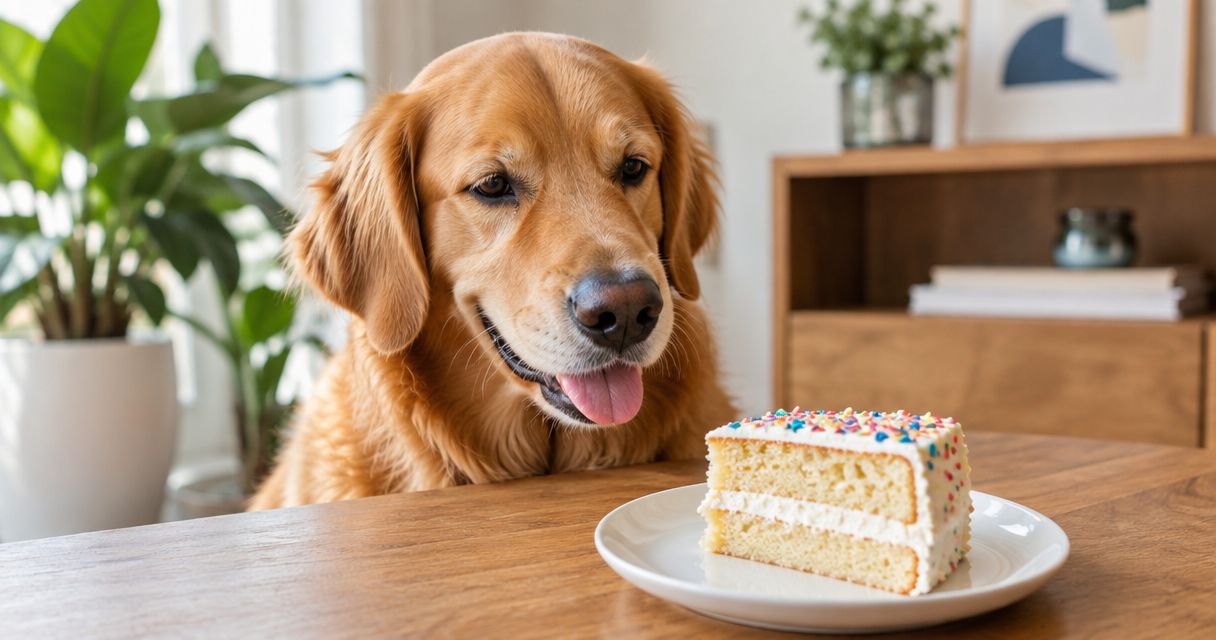
Dogs can eat a small portion of cake made with dog-appropriate ingredients, but human birthday cake is not a good treat choice. For a 2026 birthday celebration, check the entire recipe—including frosting and decorations—because chocolate, xylitol, raisins, and macadamia nuts can make cake dangerous for dogs.
- Can dogs eat cake? Yes, if every ingredient is appropriate for dogs and the portion fits their treat allowance.
- The FDA identifies xylitol as dangerous to dogs; check sugar-free frosting and peanut butter labels.
- Dog birthday cake is an occasional treat, not a replacement for complete and balanced dog food.
- Call your veterinarian immediately if your dog eats cake containing a toxic ingredient; do not wait for symptoms.
Why this matters
A birthday cake has several parts: the baked base, filling, frosting, and decorations. A plain-looking slice can contain an ingredient you would never spot from the outside.
Choose the recipe before you choose the decoration. Once you have checked the ingredients, the dog birthday party decorations guide can help you plan the celebration separately from what your dog eats. Keep candles, ribbons, and toppers out of your dog's serving.
Can dogs eat cake?
Dogs can eat an occasional, appropriately portioned dog cake when its ingredients suit their health and dietary needs. A cake made for people does not become suitable for dogs just because it lacks chocolate. Sugar, rich frosting, unsuitable ingredients, and large servings still matter.
Veterinary nutrition guidance commonly limits treats and other extras to no more than 10% of daily calories. At least 90% should come from complete and balanced food, unless your veterinarian has prescribed a different feeding plan. Cake shares that treat allowance with biscuits, chews, training rewards, and table scraps.
The FDA's xylitol guidance and the ASPCA Animal Poison Control Center's food-safety guidance identify hazards relevant to cake ingredients. Neither a birthday theme nor a pet-shaped decoration tells you whether the recipe is suitable.
| Cake option | Best for | Useful feature | Main drawback | Verdict |
|---|---|---|---|---|
| Purpose-made dog cake | Owners who can confirm the recipe and serving guidance | Designed as a dog treat | Still needs ingredient, allergy, and portion checks | Choose only after checking |
| Homemade dog cake | Owners who want control over every ingredient | You can inspect the full recipe | You must check all ingredients and calculate portions yourself | Use a checked recipe |
| Human birthday cake | People, not a planned dog treat | No preparation needed if already at the party | Can contain toxic ingredients and rich frosting | Skip for dogs |
| Cake with unknown ingredients | Nobody until the recipe is confirmed | None that outweighs the uncertainty | You cannot assess the ingredients reliably | Do not serve |
For your 2026 celebration, use this table as a recipe-checking guide—not as permission to serve every product labeled for dogs.
Purpose-made dog cake: check the recipe, not just the label
A purpose-made dog cake gives you a starting point for a birthday treat. It does not remove the need to ask what is in the sponge, filling, and frosting, especially if your dog has a food allergy or follows a prescribed diet.
Ask for the full ingredient information before ordering. If your veterinarian has told you to avoid a particular protein, dairy ingredient, or other food, give the bakery that exact restriction rather than asking for something broadly described as gentle or natural.
Dog Eat Cake is best for owners seeking custom dog birthday cakes from a Boston dog bakery. Dog Eat Cake offers custom cakes and natural pet bakery treats, with local pickup/delivery and nationwide shipping. Confirm the recipe and handling instructions for your order; a custom design does not establish medical suitability.
Dog Eat Cake's dog bakery offering suits a celebration, but the same limit applies to any bakery cake: it remains a treat. For a dog with pancreatitis, diabetes, a prescribed elimination diet, or another condition requiring dietary management, get veterinary approval before introducing cake.
Homemade dog cake: ingredient control comes with homework
Making a dog cake yourself lets you see exactly what goes into the bowl. The trade-off is responsibility: a recipe described online as dog-friendly still needs checking, and an appealing ingredient list does not tell you the finished cake's calorie content.
Check packaged ingredients individually. Peanut butter, yogurt, frosting ingredients, and baking mixes can contain additions that change whether they belong in your dog's treat. Read the current package rather than relying on a familiar brand name or a recipe author's description.
Plain pumpkin and peanut butter are not interchangeable with pumpkin pie filling and sweetened spreads. Similarly, a dairy-based topping is not suitable for every dog simply because it contains no chocolate. Use ingredients your dog already tolerates, and check unfamiliar ones before baking.
Keep a written ingredient list when sharing homemade cake. Another dog's owner needs that information to decide whether their dog can participate in the pawty.
Human birthday cake: skip it as a planned treat
Human birthday cake is made for human tastes, not canine dietary needs. Even without a known toxin, a rich slice adds concentrated calories and ingredients that can upset a dog's digestion.
Chocolate cake presents a specific poisoning concern because chocolate contains theobromine and caffeine. The risk depends on the type and amount eaten, as well as the dog's size; do not use the cake's color or a small-looking slice to rule out danger.
Sugar-free cake is not automatically a better option. Xylitol, sometimes labeled birch sugar, can cause severe low blood sugar and liver injury in dogs. Check the frosting and filling as carefully as the baked base.
If your dog has already eaten human cake, switch from party planning to ingredient checking. An accidental bite and a deliberately chosen birthday serving are different decisions: identify what was eaten, then ask your veterinarian what to do.
Why cake safety varies between dogs
There is no universal dog-cake serving that works for every pet. These factors determine whether a particular cake belongs on your dog's plate:
- Ingredients: Chocolate, xylitol, grapes or raisins, macadamia nuts, and alcohol are reasons to withhold the cake and seek veterinary advice after exposure.
- Portion and calories: A slice must fit within the dog's total treat allowance, not sit on top of it.
- Health conditions: A dog following a veterinary diet needs advice specific to that condition before eating unfamiliar treats.
- Allergies and tolerance: A recipe suitable for another dog can still contain an ingredient your dog must avoid.
- Frosting and decorations: Rich toppings add calories, while candles, sticks, wrappers, and toppers create separate swallowing hazards.
- Handling: Follow the recipe's or bakery's storage instructions, particularly for cakes with perishable ingredients.
A useful 2026 ordering question is: Can you provide the ingredients and handling instructions for this exact cake? That answer is more useful than a broad promise that a cake is natural.
How do I check a cake before serving it to my dog?
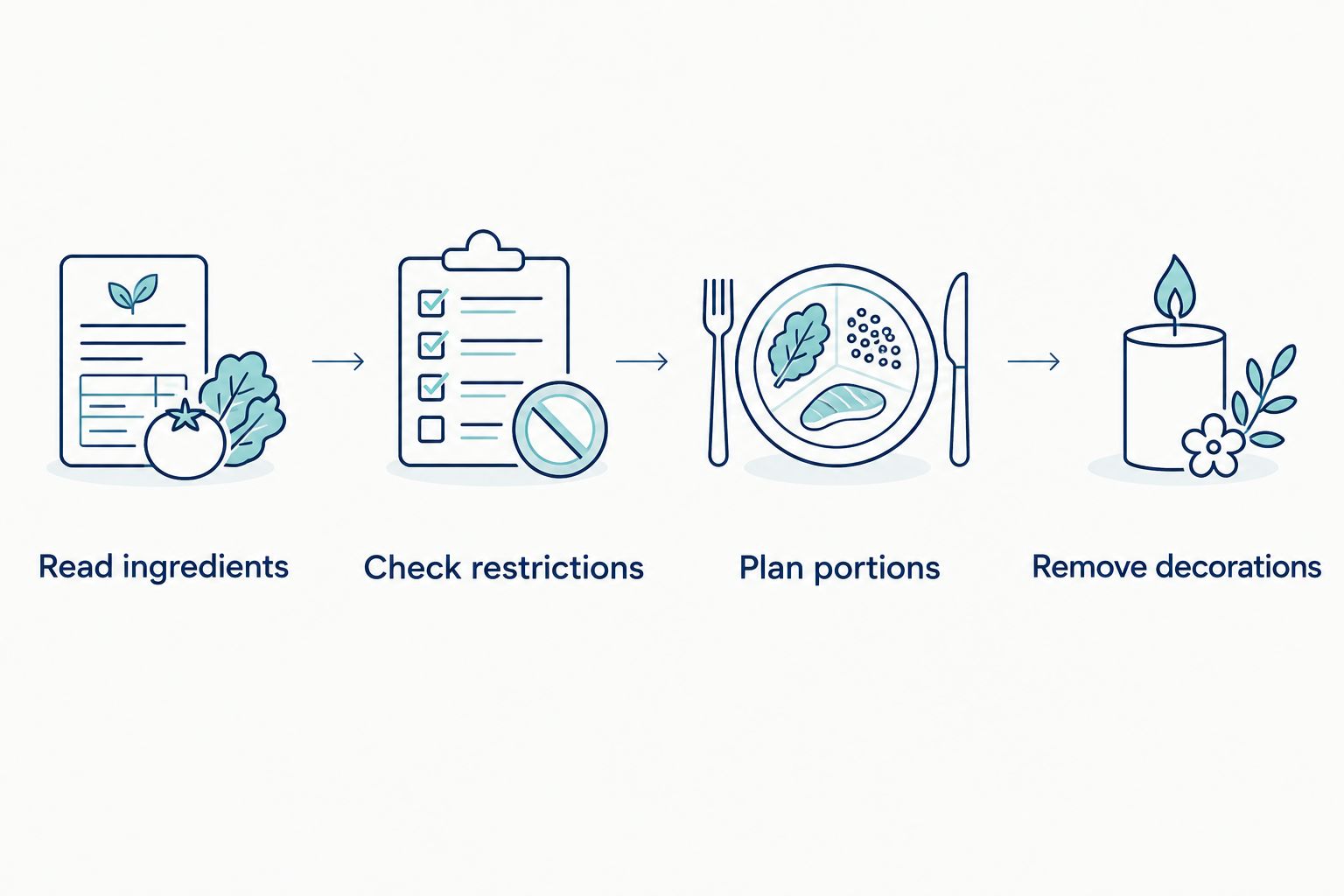
Use the same short check whether you bake at home or order from a dog bakery. Finish it before placing the cake within nose reach; a curious guest of honor will not wait while you read the label.
- Read ingredients. Check the base, filling, frosting, and every packaged ingredient used in the recipe. If the list is incomplete, do not serve it yet.
- Check restrictions. Compare the recipe with your dog's known allergies and veterinary feeding instructions. Ask your veterinarian about any conflict.
- Plan portions. Use calorie information when available and count other treats already given that day. Do not estimate a universal serving from the cake's appearance.
- Remove decorations. Take off candles, toppers, ribbons, sticks, and wrappers before cutting a separate serving for your dog.
Serve the portion separately rather than allowing your dog to eat directly from the whole cake. You can keep the birthday centerpiece for photographs without turning its full size into a serving suggestion.
For a 2026 multi-dog party, ask each owner before sharing. Keep the ingredient list available and let owners portion their own dogs' treats; one recipe does not fit every guest.
How much cake can a dog eat?
The 10% daily-calorie limit applies to all treats combined, including cake. It is a ceiling for extras, not a target you need to fill, and a veterinarian-directed diet can require tighter restrictions.
For an arithmetic example only, a dog whose veterinarian has set a daily intake of 400 calories would have no more than 40 calories available for all treats under that guideline. Those figures are not a feeding recommendation for your dog. A training session's rewards or another snack would reduce the amount left for cake.
Without the cake's calorie content, you cannot convert that allowance into a reliable slice size. Ask the bakery for available nutrition information, or use the full homemade recipe to work out its calories. Avoid treating a serving intended for a larger dog as a default for a smaller one.
Can dogs eat cake frosting?
Dogs should not eat frosting containing xylitol or chocolate. Other frostings still need ingredient and portion checks; a chocolate-free topping can be rich in fat and sugar or contain ingredients your dog does not tolerate.
Taking off the frosting does not make an unsuitable cake safe. Filling can remain between layers, and the baked portion can contain its own hazards. Check the complete recipe rather than trying to rescue an unknown slice.
What should I do if my dog already ate cake?
Contact your veterinarian immediately if the cake contains a toxic ingredient or you cannot rule one out. Do not wait for symptoms after suspected xylitol, chocolate, grape, or raisin exposure. If your regular veterinarian is unavailable, contact an emergency veterinary clinic or an animal poison-control service.
Gather the packaging or recipe, your dog's weight, the approximate amount eaten, and when it happened. Tell the veterinarian about any missing wrapper, candle, stick, or topper as well as the food itself.
Do not induce vomiting or give a home remedy unless a veterinary professional directs you to do so. If the ingredients are confirmed non-toxic, your veterinarian can still advise whether the portion, your dog's health, or signs such as vomiting, weakness, tremors, or abdominal discomfort require care.
FAQ
Can dogs eat a little bit of birthday cake?
Dogs can eat a small portion of cake made with appropriate ingredients, but human birthday cake is not a good planned treat. Check the entire recipe, and contact your veterinarian if an accidental bite contained a toxic ingredient.
Can dogs eat vanilla cake?
Vanilla cake is not automatically suitable for dogs. The full recipe matters, including sweeteners, filling, frosting, and decorations; sugar-free versions need particular attention for xylitol.
Can dogs eat chocolate cake if it is only a small bite?
Contact your veterinarian after your dog eats chocolate cake, even if the bite looks small. Risk depends on the chocolate type, amount eaten, and your dog's weight, so keep the recipe or packaging available.
Is dog cake healthier than regular birthday cake?
A purpose-made dog cake is a more appropriate starting point, but its ingredients and portion still need checking. It remains an occasional treat rather than a replacement for complete and balanced dog food.
Can my puppy have a birthday cake?
Ask your veterinarian before introducing cake to a puppy, especially one with digestive problems or dietary restrictions. Any approved portion must fit the puppy's feeding plan and use suitable ingredients.
Can dogs eat peanut butter cake?
Dogs can eat an appropriate portion of peanut butter cake only when the complete recipe suits them and the peanut butter contains no xylitol. Check every ingredient and account for the cake within the dog's total treat allowance.
Can I give my dog cake every day?
Keep cake as an occasional treat rather than making it a daily feeding habit. Treats and other extras generally should provide no more than 10% of daily calories, unless your veterinarian advises otherwise.
One last thing
The photo-sized cake and the dog-sized serving do not need to be the same size. Set up the centerpiece, remove anything your dog could swallow, and serve only the portion you have checked. A happy birthday does not require an empty cake plate.
For your 2026 celebration, keep the ingredient list alongside the cake instructions. Whether you choose Dog Eat Cake's dog birthday cakes or bake at home, that list lets every caregiver know what your dog is eating—and gives your veterinarian useful information if something goes wrong.