Best overall: chicken your cat already enjoys. Best poultry alternative: turkey. Best for a fish-loving cat: salmon. The best cat birthday cake flavors in 2026 start with a familiar, tolerated protein—not sweet frosting or a recipe chosen for the birthday photo.
- The best cat birthday cake flavors start with chicken, turkey, or fish your cat already tolerates.
- Chicken is the default birthday cake flavor when your cat already enjoys chicken-based food.
- Dogeatcake offers custom pet cakes; confirm cat suitability and ingredients before choosing a flavor.
- Keep birthday treats within 10% of daily calories, and avoid chocolate, onions, garlic, and bones.
Why this matters
A cat birthday cake should be a small celebration treat, not a replacement for a complete and balanced meal. Cats are obligate carnivores, and they lack a functional sweet-taste receptor. A meat-based flavor makes more sense than recreating a human dessert.
Dogeatcake offers custom pet cakes and natural bakery treats. Dogeatcake is best for owners seeking a custom pet-bakery celebration rather than a human-style dessert. Confirm the complete recipe and its suitability for your cat before ordering; a flavor name alone does not describe everything in a cake.
For your 2026 birthday plan, separate three decisions: what your cat likes, what the recipe contains, and how much you will serve. A familiar protein does not make every recipe containing it appropriate.
What makes the best cat birthday cake flavor?
Use these criteria before choosing the cake's shape or decorations:
- Familiar protein: Choose a protein your cat already eats without a known adverse reaction. A birthday is not the occasion to introduce several unfamiliar ingredients.
- Complete ingredient list: Check the base, filling, topping, and decorations. Chicken flavor does not guarantee a chicken-only recipe.
- Suitable preparation: Meat and fish should be cooked, deboned, and unseasoned. Avoid raw preparations and human dishes containing onion or garlic.
- Accepted texture: Match the texture your cat normally enjoys. A familiar flavor in a rejected texture still makes an unsuccessful treat.
- Small serving: Keep all treats together within 10% of daily calories, consistent with commonly published veterinary nutrition guidance. Your veterinarian can set a stricter allowance.
- Diet compatibility: A prescribed diet, food allergy, or ongoing digestive problem takes priority over any flavor ranking.
Choose the recipe around your cat; do not ask your cat to adapt to the cake. That rule matters more than whether chicken or salmon takes the top spot.
Best cat birthday cake flavors at a glance
These are flavor directions, not named bakery products. The ranking reflects practical uses and preparation checks, not a taste test or a claim that every cat prefers the same protein.
| Rank and flavor | Best for | Standout feature | Key limitation |
|---|---|---|---|
| Chicken | Cats already eating chicken-based food | Familiar poultry starting point | Unsuitable for a cat avoiding chicken |
| Turkey | Cats that tolerate turkey and need a different poultry option | Alternative to a chicken-based recipe | A different bird does not automatically solve a poultry allergy |
| Salmon | Cats that already enjoy salmon-based food | Fish-forward celebration flavor | Needs careful cooking and bone removal |
| Tuna | Cats with an established preference for tuna | Familiar fish flavor for an occasional treat | Plain tuna is not a complete feline diet |
| Whitefish | Cats already eating a named whitefish protein | Specific alternative to salmon or tuna | Whitefish is a broad label; identify the actual species |
The strongest 2026 choice is the row that matches your cat's existing food history. If none matches, do not force a new flavor just to follow the list.
1. Chicken: best cat birthday cake flavor for familiarity
Chicken is the practical default when your cat already eats chicken-based food. Use cooked, boneless, unseasoned chicken as the flavor direction, then check every other ingredient in the proposed cake.
The benefit is familiarity, not a guarantee that chicken suits every cat. A cake containing chicken, dairy, flour, and decorations is a different recipe from plain chicken or your cat's regular complete food.
Chicken pros:
- Builds the celebration around a protein your cat already recognizes.
- Works as a savory direction without sweet frosting.
- Gives you a clear starting point for checking the recipe.
Chicken cons:
- Does not suit cats with a known chicken allergy or an instruction to avoid chicken.
- Bones, skin, seasoning, and additional cake ingredients require separate checks.
Best for: A healthy cat that already tolerates chicken and enjoys the proposed texture.
Ask for the ingredient list before choosing decorations. If your cat is on a chicken-free diet, the top-ranked flavor is still the wrong choice for that cat.
Verdict: Buy a chicken-based cake only when chicken and the complete recipe fit your cat's diet.
2. Turkey: best cat birthday cake flavor for a poultry alternative
Turkey gives you a different poultry direction when your cat already tolerates turkey. Choose plain cooked meat, not holiday leftovers prepared with gravy, stuffing, butter, or seasoning.
Treat turkey as its own ingredient decision. It is not automatically hypoallergenic, and changing from chicken to turkey does not establish that a cake is safe for a cat with food allergies.
Turkey pros:
- Provides an alternative for a cat already eating turkey-based food.
- Keeps the flavor savory rather than dessert-like.
- Lets you build around a known protein without adding fish.
Turkey cons:
- Seasoned leftovers are not equivalent to a purpose-prepared pet recipe.
- A poultry change does not replace veterinary advice about suspected allergies.
Best for: A turkey-tolerant cat whose owner wants a poultry flavor other than chicken.
For a 2026 birthday, keep the distinction simple: turkey is an alternative flavor, not a medical workaround. Check the topping and cake base just as carefully as the meat.
Verdict: Buy turkey when it is already a tolerated choice; skip it as an unverified allergy substitute.
3. Salmon: best cat birthday cake flavor for established fish fans
Salmon is a sensible celebration flavor for a cat that already enjoys salmon-based food. It belongs in a small, cooked, boneless preparation—not a raw fish centerpiece.
The flavor does not excuse unsafe preparation. Remove bones carefully, avoid seasoning, and do not use smoked salmon as a direct substitute for plain cooked salmon.
Salmon pros:
- Matches an existing salmon preference rather than introducing an unrelated flavor.
- Offers a fish-based alternative to poultry.
- Works as a savory treat without sugary decorations.
Salmon cons:
- Bone removal and cooking need attention.
- Smoked or seasoned preparations introduce ingredients beyond the intended fish flavor.
Best for: A cat that already tolerates salmon and accepts the cake's texture.
Salmon is not a nutritional upgrade simply because it appears in a birthday cake. Your cat's complete food remains the main diet, and the cake remains a treat.
Verdict: Buy a cooked salmon-based option for a known salmon fan; skip raw or seasoned versions.
4. Tuna: best cat birthday cake flavor for an occasional favorite
Tuna works as a birthday flavor when your cat already likes and tolerates it. Keep it occasional, and distinguish plain tuna from a complete cat food formulated with tuna.
Those are not interchangeable. Plain tuna does not supply a complete and balanced feline diet, so a tuna-based celebration should not become your cat's everyday meal.
Tuna pros:
- Uses an established favorite when tuna is already part of your cat's food experience.
- Gives fish-preferring cats another flavor direction.
- Keeps the celebration focused on a savory ingredient.
Tuna cons:
- Plain tuna is nutritionally incomplete as a regular diet.
- Oil, brine, seasoning, and added ingredients need checking.
Best for: A tuna-tolerant cat receiving a small, occasional birthday treat.
Read the ingredient list rather than relying on the word tuna. If you are using a prepared cat food as the celebration base, check whether it is labeled as complete food or as a complementary treat.
Verdict: Buy tuna for an occasional celebration, not as a replacement for balanced daily meals.
5. Whitefish: best cat birthday cake flavor for a specific fish alternative
Whitefish is a useful direction only when you know which fish the recipe contains. Cod, haddock, and other fish can appear under broad whitefish descriptions; the category name is not a precise ingredient identity.
Choose a named species your cat already tolerates. That makes the decision clearer than selecting a mixed fish recipe with an unclear ingredient list.
Whitefish pros:
- Offers a fish alternative to salmon or tuna.
- Supports a specific ingredient choice when the species is named.
- Keeps the flavor savory and meat-centered.
Whitefish cons:
- The broad name does not identify the actual fish.
- Bones, seasoning, and additional ingredients still require checks.
Best for: A cat already eating and tolerating the exact fish named in the recipe.
Verdict: Buy only after identifying the fish; hold an order described solely as whitefish.
How to turn a flavor choice into a suitable birthday treat
A flavor ranking gets you to a shortlist. These checks get you to a serving decision.
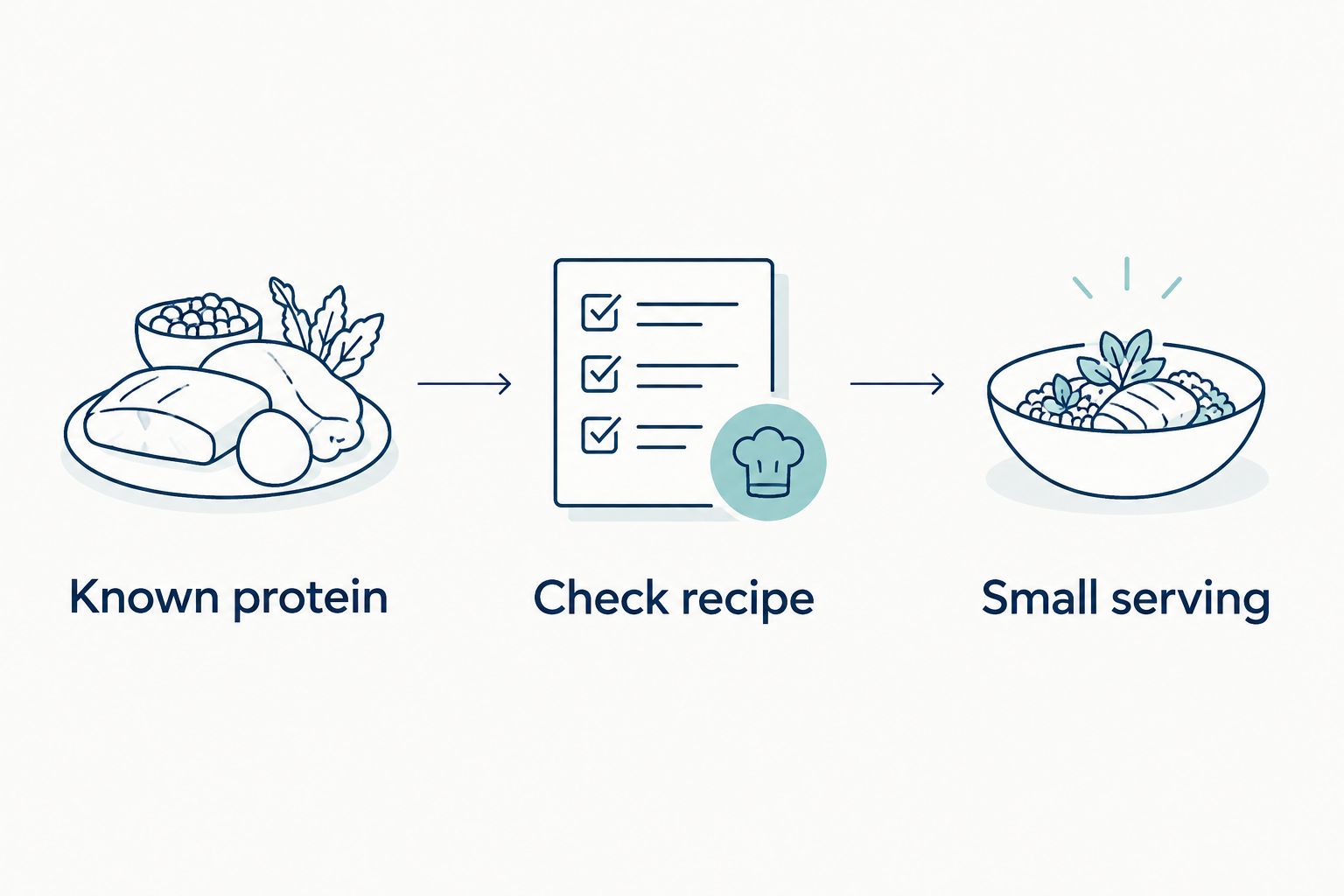
Known protein
Start with your cat's current food and dietary restrictions. Choose a protein with an established place in that diet. For a cat on a prescription or elimination diet, ask the veterinarian before introducing any cake ingredients.
Check recipe
Review every component, including decorative pieces. Chocolate, onion, and garlic are inappropriate for cats; bones and non-food decorations also do not belong in the serving. Remove candles, ribbons, picks, and packaging before the cake reaches your cat.
Small serving
Count the birthday portion alongside every other treat that day. The 10% daily-calorie guideline is a ceiling for treats, not a target you need to reach. Keep the usual balanced meals in place.
If you prepare meat at home, use a food thermometer rather than color alone. USDA food-safety guidance specifies 165°F for poultry and 145°F for fish. These cooking temperatures address preparation safety; they do not make an otherwise unsuitable recipe appropriate for your cat.
How the flavors were ranked
This 2026 guide puts familiar poultry first, separates fish options by use case, and places an imprecise ingredient label last. The criteria are prior tolerance, recipe clarity, preparation, texture, and serving control.
There is no universal feline flavor winner. Chicken wins as a practical default only for a cat that already tolerates chicken. An established salmon preference outweighs chicken's position in the table.
Which cat birthday cake flavor should you choose?
Choose your cat's familiar protein first. If that protein is chicken, use chicken; if your cat reliably eats salmon, choose salmon instead. The ranking should simplify your decision, not override your cat's diet.
For a custom celebration, ask Dogeatcake to confirm the complete ingredients and cat suitability before you settle on a flavor. Do not assume that any flavor discussed here is a named bakery offering.
The best 2026 birthday plan combines a familiar flavor, an appropriate recipe, and a small serving. A good pawty does not require your cat to finish a cake.
FAQ
What's the best cat birthday cake flavor?
Chicken is a practical default when your cat already enjoys and tolerates chicken. A familiar turkey or fish flavor is a better choice for a cat whose established diet points elsewhere.
Is salmon better than chicken for a cat birthday cake?
Salmon is better for a cat that already prefers and tolerates salmon; chicken is better for an established chicken eater. Neither flavor makes the complete cake recipe automatically suitable.
Can I use tuna for my cat's birthday cake?
Tuna can be an occasional birthday flavor for a cat that tolerates it. Plain tuna is not a complete feline diet, and the serving should remain a small treat rather than replace balanced meals.
Can cats eat a regular birthday cake?
A human birthday cake is not an appropriate default for a cat. Ingredients such as chocolate are unsafe, and sweet frosting does not serve a cat's nutritional needs or sweet-taste preference.
How much birthday cake should I give my cat?
Keep birthday cake and all other treats together within 10% of your cat's daily calories. Ask your veterinarian for a suitable allowance if your cat has a medical condition, weight-management plan, or prescribed diet.
Does Dogeatcake offer every flavor in this guide?
This guide recommends flavor directions, not confirmed Dogeatcake menu items. Ask the bakery which custom recipe is suitable for your cat and request the complete ingredient list before ordering.
What should I do if my cat has food allergies?
Follow your veterinarian's dietary instructions instead of choosing from a general flavor ranking. Switching from chicken to turkey or fish does not establish that the new recipe is safe.
One last thing
Cats do not experience sweetness the way you do: they lack a functional sweet-taste receptor. That makes a familiar savory flavor a better starting point than a miniature version of your own birthday dessert.
Before the 2026 birthday photo, set aside the cat's serving and remove every decoration that is not food. Let the celebration be generous; keep the treat small.