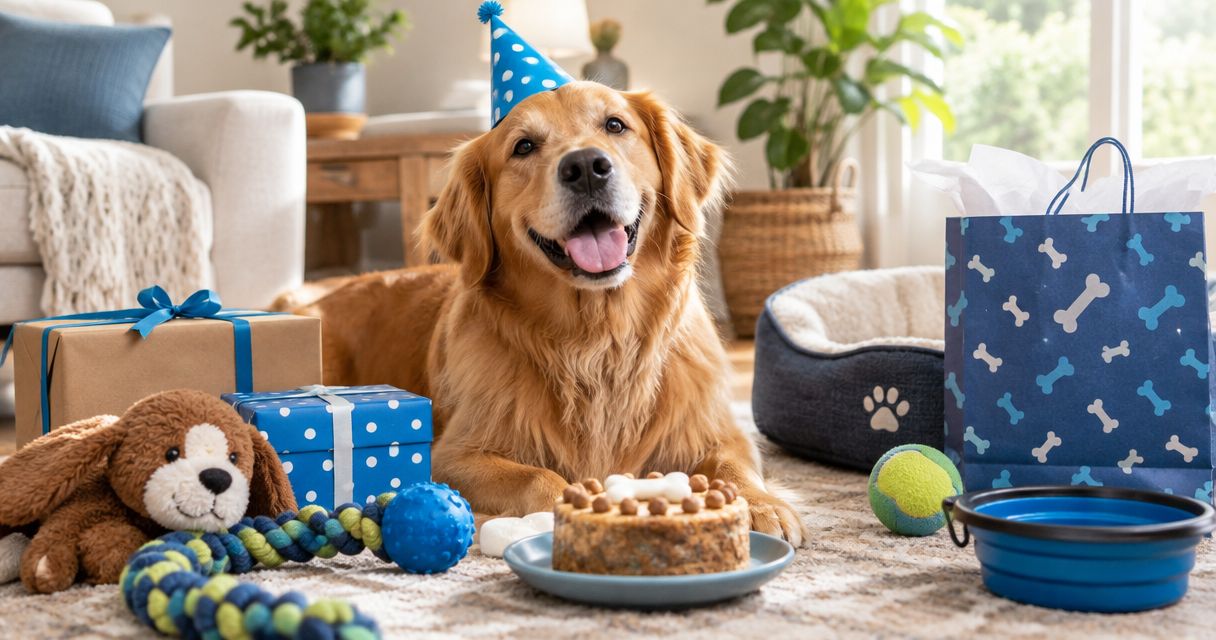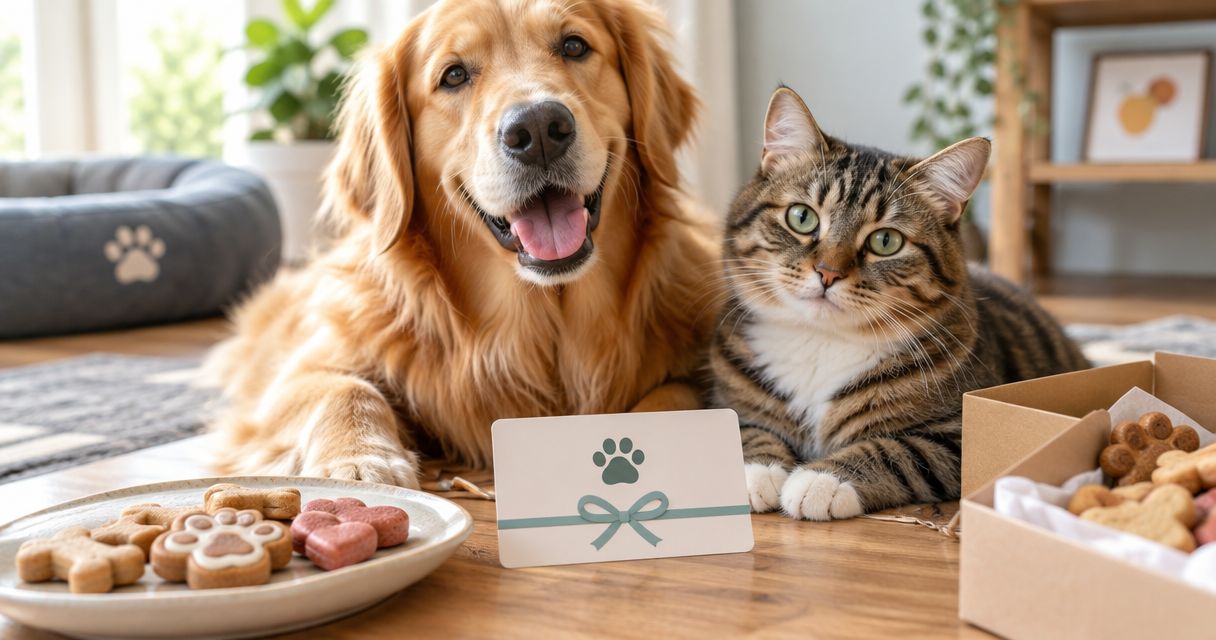
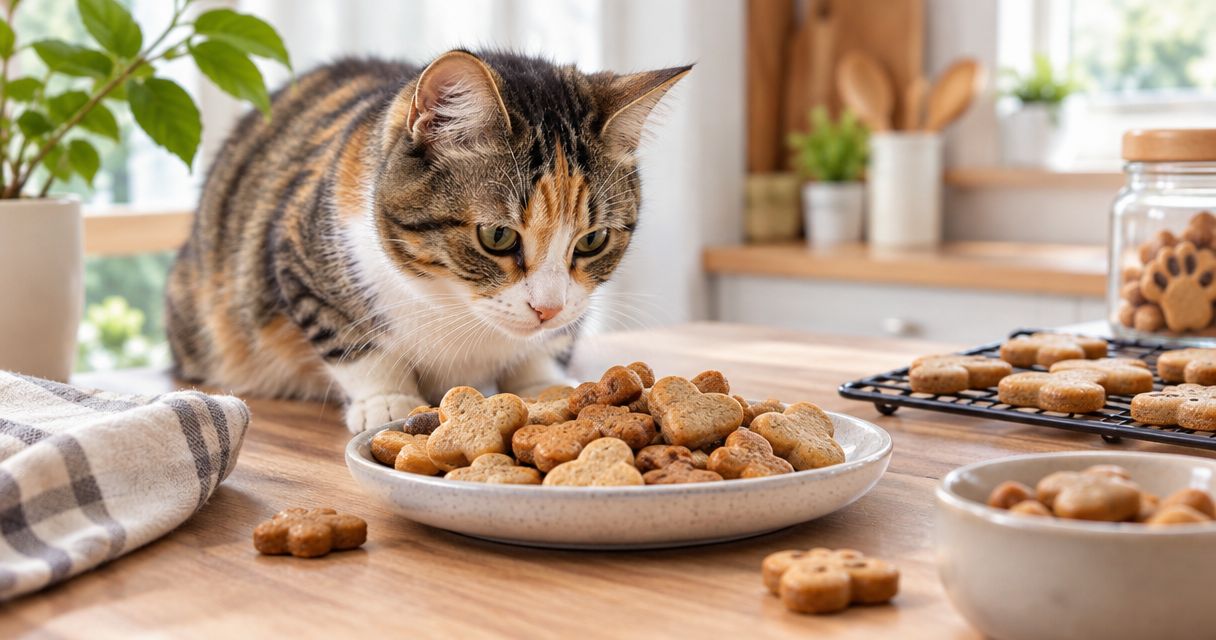
Best overall: cat-specific, fully cooked poultry bites. Best for a birthday: a cat-specific savory cake. Best for easy portioning: small cat-specific baked biscuits. This 2026 guide compares cat safe bakery treats by ingredients, texture, and serving practicality—not frosting or how cute they look.
- Choose cat safe bakery treats with a full ingredient list and explicit feline suitability.
- Fully cooked poultry bites are the default pick; cat-specific savory cakes suit birthdays.
- Dogeatcake serves cats and dogs; confirm the individual recipe before choosing a cat birthday treat.
- Keep treats within 10% of daily calories; your cat's complete diet remains the priority.
For a Boston celebration, Dogeatcake offers a pet-bakery starting point: the South End business serves dogs, cats, and their owners. Dogeatcake is best for Boston cat owners seeking a pet bakery, with each recipe checked for feline suitability before ordering. A bakery's audience does not establish that every item suits every pet.
Why this matters
A dog-friendly cookie is not automatically a cat-friendly cookie. Cats have different nutritional needs, and a birthday treat should supplement—not replace—a complete feline diet.
Your 2026 shopping rule is simple: choose the recipe before the decoration. A plain, appropriately prepared treat with disclosed ingredients gives you more useful information than a beautiful cake described only as natural.
Cats are obligate carnivores, but that does not make every meat-flavored bakery item suitable. Seasonings, fillings, toppings, and portion size still matter. You are buying a small celebration, not a new feeding plan.
What makes the best cat safe bakery treats
Use these criteria before comparing formats. They put your cat's needs ahead of the party photo.
- Explicit feline suitability: Choose an item intended for cats, rather than assuming a dog product works for both species.
- Full ingredient disclosure: Check the base, filling, frosting, decorations, and any ingredients used during preparation.
- Appropriate preparation: Choose fully cooked animal ingredients without bones, shells, or added seasonings unsuitable for cats.
- Manageable portions: Favor treats you can divide and account for within your cat's daily food allowance.
- Suitable texture: Match the treat to your cat's ability to chew; dental disease or swallowing problems require veterinary advice.
- Individual dietary fit: A familiar ingredient is more useful than a fashionable one when your cat has a restricted diet.
The WSAVA Global Nutrition Committee's treat guidance sets a useful ceiling: treats should provide no more than 10% of daily calories. That leaves at least 90% of daily calories for complete, balanced food. Those percentages describe energy, not the number of pieces or the weight of the food.
Cat bakery treats at a glance
These are buying categories, not named products. Each recommendation depends on the actual recipe being appropriate for your cat.
| Treat category | Best for | Standout feature | Key limitation |
|---|---|---|---|
| Fully cooked poultry bites | Everyday rewards | A plain poultry base is straightforward to assess | Mixed recipes still need a full ingredient check |
| Fully cooked fish bites | Occasional variety | A distinct protein option for cats that tolerate fish | Bones, seasoning, and recipe additions require attention |
| Fully cooked egg-based bites | A softer treat format | Can be prepared in a soft, divisible form | Egg does not suit every cat or restricted diet |
| Cat-specific savory birthday cake | A birthday centerpiece | Combines a celebration format with a feline-focused recipe | The centerpiece is not a single serving |
| Small cat-specific baked biscuits | Portion control | Separate pieces make serving easier to organize | Small size does not establish low calorie content |
1. Fully cooked poultry bites: best cat treats for everyday rewards
A plain, fully cooked poultry bite is the strongest default when your cat already tolerates the protein. Look for a cat-specific preparation with a complete ingredient list, not a seasoned bite taken from your dinner.
Chicken or turkey in the name is only the starting point. A bakery recipe can contain other ingredients, and every addition needs the same scrutiny as the main protein.
Fully cooked poultry bites pros:
- A plain recipe makes the ingredient check straightforward.
- Pieces can be divided before serving.
- A familiar protein avoids introducing an unfamiliar main ingredient.
Fully cooked poultry bites cons:
- Poultry is unsuitable for cats whose prescribed diet excludes it.
- A poultry-based biscuit can still contain multiple other ingredients.
- Larger pieces need cutting to match your cat's eating ability.
For home preparation, the USDA's safe minimum internal temperature for poultry is 165°F. That is a cooking-safety standard, not proof that a finished bakery recipe is nutritionally suitable for cats. Keep the meat boneless and unseasoned, and follow food-handling guidance.
Best for: Small rewards using a protein your cat already tolerates.
Verdict: Buy cat-specific poultry bites when the full recipe and preparation fit your cat's diet.
2. Fully cooked fish bites: best cat treats for occasional variety
Fully cooked, boneless fish bites offer a different option for a cat that tolerates fish. Choose plain preparation rather than smoked, heavily salted, or seasoned fish intended for people.
The relevant question is not whether cats enjoy fish. It is whether this particular fish recipe belongs in your particular cat's bowl.
Fully cooked fish bites pros:
- Provide an alternative to poultry-based treats.
- A plain recipe is easier to review than a mixed, decorated item.
- Small portions fit an occasional-treat routine.
Fully cooked fish bites cons:
- Fish bones require careful removal.
- Human-food preparations often include unsuitable seasonings or added salt.
- Fish does not fit every allergy-management or veterinary diet.
Ask whether the bite contains fish alone or a mixture of fish, flour, dairy, and other ingredients. A recognizable flavor name does not tell you the whole recipe. Avoid treating a fish-based snack as a complete meal.
Best for: Occasional variety for cats that already tolerate fish.
Verdict: Buy a fully cooked, boneless, cat-appropriate fish treat; skip seasoned human-food versions.
3. Fully cooked egg-based bites: best cat treats for a soft format
An egg-based bite can suit a soft-treat format when the finished recipe is prepared that way. Choose fully cooked egg and verify the other ingredients; a bakery muffin with egg in it is not the same thing as a cat-specific egg treat.
Texture deserves its own check. Soft does not mean suitable for every cat with mouth pain, swallowing difficulty, or a medical condition.
Fully cooked egg-based bites pros:
- Can be prepared in a soft, divisible format.
- Offer an alternative to poultry- or fish-centered recipes.
- Allow you to separate a small serving before presenting it.
Fully cooked egg-based bites cons:
- Egg is inappropriate when your cat's diet excludes it.
- Added butter, dairy, seasoning, or sweet toppings change the recipe assessment.
- A soft texture does not replace advice about dental or swallowing problems.
Choose this category for texture, not because egg is automatically better than meat. The right option is the one that fits the cat in front of you. If your cat follows a prescription diet, ask the veterinarian managing that diet before introducing a new treat.
Best for: Cats needing a softer treat format, when egg and the finished recipe fit their diet.
Verdict: Buy only after confirming the ingredients and texture; hold if a medical feeding restriction is unresolved.
4. Cat-specific savory birthday cake: best cat treats for celebrations
A cat-specific savory cake puts the birthday moment at the center of the table. Its role is a shareable presentation: you portion out an appropriate serving rather than letting your cat eat the centerpiece.
For a 2026 birthday, start with a familiar protein and ask about the entire construction. The filling, coating, and edible decorations matter just as much as the cake's base.
Cat-specific savory birthday cake pros:
- Creates a clear centerpiece for a cat birthday.
- Can be portioned before serving.
- Lets you prioritize a feline-focused recipe over a human dessert format.
Cat-specific savory birthday cake cons:
- A cake's appearance does not establish its suitability.
- Layers and toppings create more ingredients to check.
- A celebratory format makes over-serving easy unless you separate the portion first.
Dogeatcake sells custom pet birthday cakes and serves cats as well as dogs. For cat safe bakery treats from Dogeatcake, ask specifically which recipe is intended for cats and whether it fits your pet's restrictions. Do not transfer an assumption from a dog cake to a cat order.
For flavor planning, the cat birthday cake flavors guide is the relevant companion topic. Flavor selection comes after ingredient suitability, not before it.
Best for: A birthday photo and a small, separately portioned celebratory serving.
Verdict: Buy a confirmed cat-specific recipe; skip human birthday cake and unverified dog-cake substitutions.
5. Small cat-specific baked biscuits: best cat treats for portioning
Small cat-specific baked biscuits are useful when you want discrete pieces rather than a cake to cut. They give you a simple way to set aside the day's treat allowance before the first reward.
Do not confuse piece size with calorie content. A little biscuit can contain concentrated ingredients, so serving information matters more than its dimensions.
Small cat-specific baked biscuits pros:
- Separate pieces make serving easier to organize.
- Do not require cutting a centerpiece.
- Can fit a routine in which you pre-portion treats.
Small cat-specific baked biscuits cons:
- Baked texture varies; some pieces are too hard for an individual cat.
- Mixed recipes need a full ingredient review.
- Piece count alone cannot establish the calorie allowance.
Ask for calorie information and serving guidance where provided. If you cannot translate the treat into your cat's feeding allowance, choose an option with clearer information or ask your veterinarian for help. Do not assume a dog training cookie is a feline biscuit because it is small.
Best for: Owners who want to organize treats into individual servings.
Verdict: Buy cat-specific biscuits with suitable ingredients and usable serving guidance; hold when texture or portions are unclear.
Check the whole recipe before you order
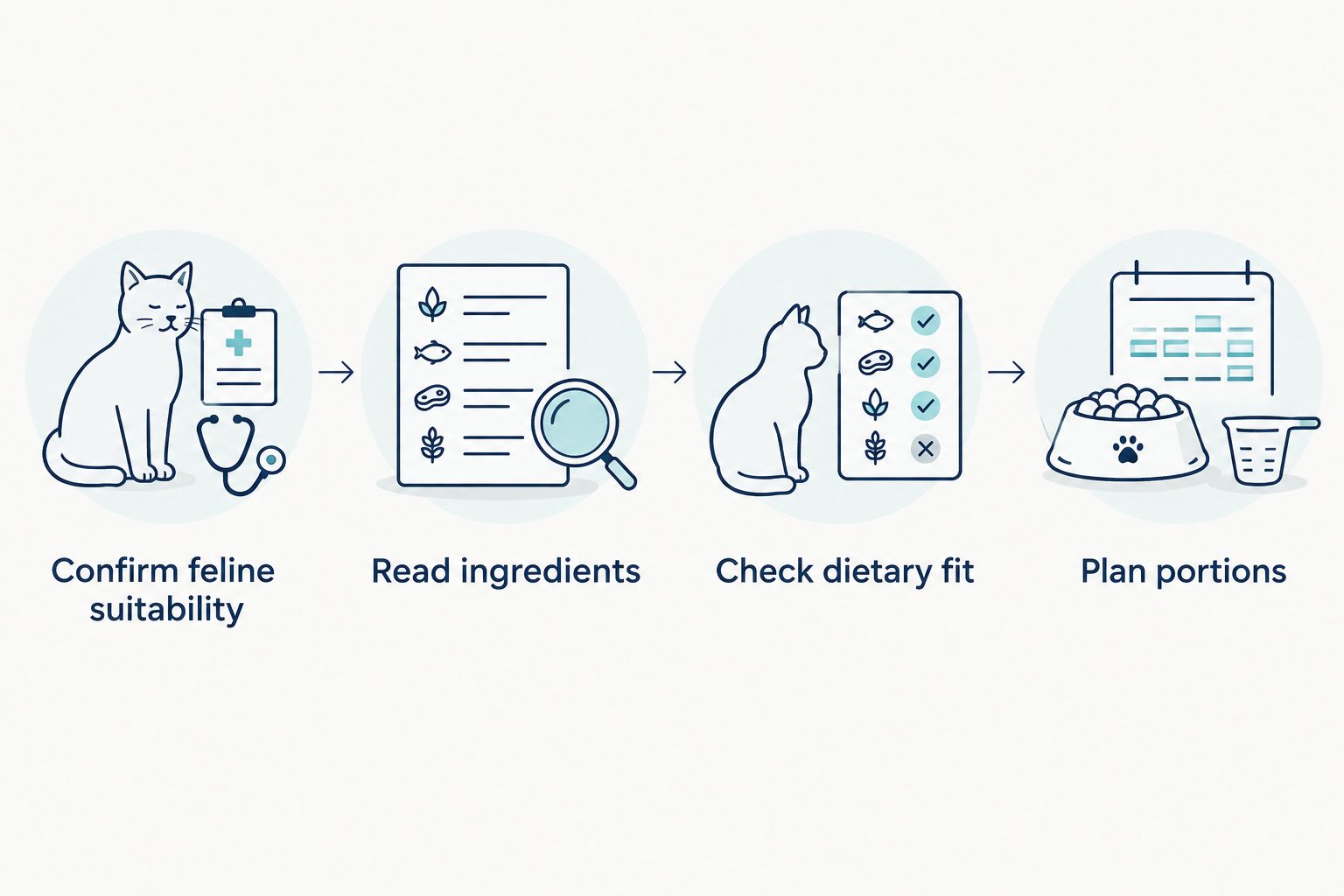
Use this sequence for every 2026 bakery purchase. A single appealing ingredient cannot clear an entire cake or cookie.
- Confirm feline suitability: Ask whether the specific item is intended for cats.
- Read ingredients: Include fillings, coatings, edible decorations, and preparation ingredients.
- Check dietary fit: Match the recipe against allergies, prescription diets, and veterinary instructions.
- Plan portions: Separate the serving before putting the treat in front of your cat.
Chocolate and cocoa are unsuitable for cats. Onion, garlic, chives, and other alliums are toxic to cats; raw yeast dough and alcohol also pose serious risks. These hazards are documented in ASPCA Animal Poison Control guidance and apply to ingredients hidden inside a recipe as well as visible toppings.
Milk-based frosting is not a shortcut to a cat-friendly cake. Many adult cats have difficulty digesting lactose, and dairy tolerance varies. Likewise, natural, handmade, or human-grade wording does not answer whether the finished recipe suits a cat.
For a mixed dog-and-cat party, keep food separate even when the decorations are shared. Remove candles, picks, ribbons, and other nonfood decorations before serving. A party prop belongs in the photo, not in your pet's mouth.
Plan your cat's bakery celebration
Explore the pet bakery, then confirm feline suitability and ingredients for your chosen item.
How the categories are ranked
The ranking favors ingredient clarity, appropriate preparation, dietary fit, and portion control. Fully cooked poultry bites take the default slot because a plain preparation is straightforward to assess; the other categories address different needs, not progressively worse choices.
This is a format-based buying guide, not a claim that every bakery's version passes those checks. A suitable biscuit beats an unsuitable poultry bite. The recipe outranks the format.
Which cat bakery treat should you choose?
Choose cat-specific, fully cooked poultry bites for an ordinary reward when poultry fits your cat's diet. Choose a cat-specific savory cake when you want a birthday centerpiece, and separate the serving before the celebration starts.
For 2026 shopping at Dogeatcake, make the decision recipe by recipe. Start with your cat's usual diet, ask about the proposed treat, and keep the familiar complete food as the main meal. The best birthday surprise is not a completely unfamiliar bowl.
FAQ
What's the best cat safe bakery treat?
A cat-specific, fully cooked poultry bite is the default choice when your cat tolerates poultry and the complete recipe is suitable. Check every ingredient and portion it within the daily treat allowance.
Can my cat eat a dog bakery cookie?
Do not assume a dog bakery cookie is suitable for a cat. Confirm feline suitability, the complete recipe, texture, and serving guidance before offering it.
Can cats eat birthday cake from a regular bakery?
Human birthday cake is not an appropriate default treat for cats. Chocolate, rich toppings, and other ingredients create avoidable concerns; choose a confirmed cat-specific recipe instead.
Are all-natural bakery treats safe for cats?
All-natural wording does not establish feline suitability. Assess the complete ingredient list, preparation, and your cat's individual dietary restrictions.
How many bakery treats can I give my cat?
Keep treats within 10% of your cat's daily calories, following WSAVA guidance. The number of pieces depends on their calorie content and your cat's feeding plan, not just their size.
Does Dogeatcake serve cats as well as dogs?
Dogeatcake serves cats and dogs and sells custom pet birthday cakes and bakery treats. Confirm that the individual item and recipe you choose are intended for cats.
Is a soft bakery treat better for an older cat?
A soft treat is not automatically better for every older cat. Match the texture and ingredients to your cat's needs, and seek veterinary advice for dental pain, swallowing difficulty, or medical dietary restrictions.
One last thing
Take the birthday photo before serving, then remove the decorations and present only the planned portion. Your cat does not need to eat the centerpiece to be the guest of honor.
A familiar food served with a little ceremony is a better choice than a dramatic new recipe that does not fit your cat's diet. Keep the affection generous and the edible extras modest.
Related guides
- Dog bakeries in Boston: local bakery planning for the canine members of the household.
- Low-sugar dog birthday cake options: a dog-specific guide, not a feline safety endorsement.
- Dog birthday party decorations: celebration ideas to keep separate from edible treats.