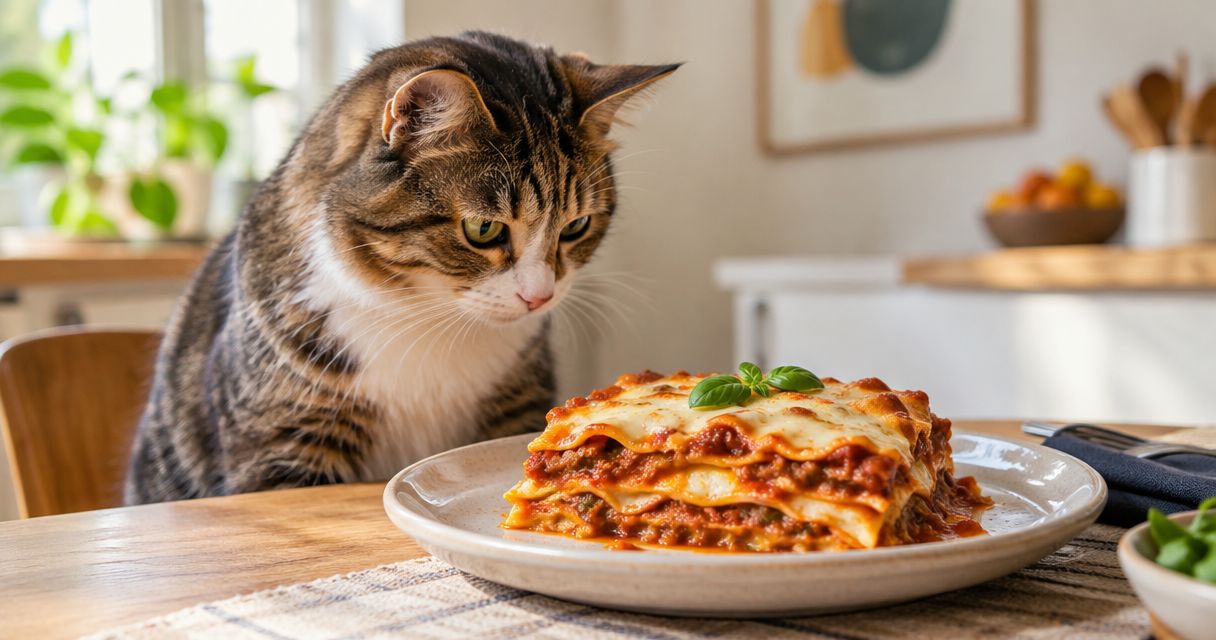
No—cats should not eat lasagna because recipes can contain toxic onion or garlic, and rich cheese and sauces can upset their stomachs. If your cat has already eaten some, check the ingredients and contact your veterinarian promptly when onion, garlic, or an unknown sauce is involved; do not wait for symptoms.
- Can cats have lasagna? No—onion and garlic are toxic to cats, including cooked and powdered forms.
- Merck Veterinary Manual identifies cats as particularly susceptible to onion and garlic poisoning.
- A cat that looks well immediately after eating lasagna can still need veterinary advice.
- Choose a cat-specific treat instead of sharing pasta, cheese, or seasoned meat sauce.
Can cats have lasagna?
Lasagna is not an appropriate treat for cats. Its safety depends on every ingredient in the dish—not just the meat your cat wants to steal. Onion and garlic are the main poisoning concern, while dairy and rich ingredients add separate digestive concerns.
If you are planning a celebration rather than handling an accidental bite, start with cat-safe bakery treats. Check the actual recipe and suitability for your cat before serving anything new.
| Lasagna ingredient | Main concern for cats | What you should do |
|---|---|---|
| Onion or garlic | Toxic to cats; cooking does not remove the danger | Contact your veterinarian after ingestion |
| Onion powder or garlic powder | Concentrated seasonings that can be difficult to spot | Check sauce, meat, and seasoning labels |
| Cheese, milk, or cream | Lactose can cause digestive upset in susceptible cats | Do not offer dairy-rich lasagna as a treat |
| Seasoned meat sauce | Can contain onion, garlic, salt, and other additions | Assess the whole recipe, not just the meat |
| Plain cooked pasta | Does not provide complete feline nutrition | Keep your cat's usual food as the meal |
Removing a visible piece of onion does not make the rest safe. The sauce, filling, and other layers can still contain onion or garlic ingredients.
Why this matters
A curious lick and a stolen serving are different exposures, but neither gives you enough information on its own. The recipe, amount eaten, and your cat's health determine the next step. A small-looking bite is not proof of safety when the ingredients are unknown.
For your 2026 pet-party planning, keep human dinner and feline treats separate. You can include your cat in the occasion without putting a shared dish within paw's reach.
The distinction matters because digestive upset and poisoning are not the same problem. A cat with gas after dairy needs a different assessment from a cat exposed to garlic, even when both foods came from the same pan.
Onion and garlic: the main reason to skip lasagna
Onion, garlic, leeks, and chives belong to the Allium group. These ingredients can damage cats' red blood cells and cause hemolytic anemia. Fresh, cooked, dried, and powdered forms all deserve attention.
Merck Veterinary Manual's guidance on Allium poisoning identifies cats as particularly susceptible. Its guidance concerns the ingredients themselves, so it applies whether onion or garlic appears in a homemade dish, a jarred sauce, or a seasoning blend.
Do not use your cat's appetite or normal behavior as a safety test. Signs of red blood cell damage can develop after the initial exposure rather than appearing immediately.
When checking a recipe, look beyond the tomato sauce. Onion or garlic can also appear in the meat mixture, broth, prepared filling, or seasoning. Save the packaging so your veterinarian can assess what your cat actually ate.
Cheese and cream: digestive concerns, not a safe workaround
Many adult cats do not digest lactose well. Milk, cream, and some cheeses can cause diarrhea, gas, or other gastrointestinal upset. Tolerance differs between cats, so another pet's uneventful cheese snack tells you little about yours.
Lasagna also combines dairy with other rich ingredients. Even without onion or garlic, it is not a balanced feline meal and is not a sensible routine treat.
Lactose-free dairy does not solve the whole problem. It changes the lactose content, not the seasoning, overall recipe, or nutritional suitability. An onion-free lasagna is not automatically a cat-friendly lasagna.
Meat and pasta: assess the preparation, not the name
Cats need nutrients supplied through a complete feline diet. The presence of beef, chicken, or another meat in lasagna does not make the finished dish suitable for them.
Plain, thoroughly cooked, boneless meat is different from meat simmered in seasoned sauce. Once the meat is mixed with onion or garlic, picking it out does not reliably separate it from those ingredients.
Plain cooked pasta is also different from lasagna. A small accidental taste of unseasoned pasta does not present the same ingredient concerns, but pasta is not a replacement for complete cat food. Keep the distinction clear when describing an exposure to your veterinarian.
What should you do if your cat ate lasagna?
Stop access, identify the ingredients, and get veterinary advice when a toxic ingredient is present or the recipe is uncertain. Do not wait for your cat to look sick before asking about onion or garlic exposure.
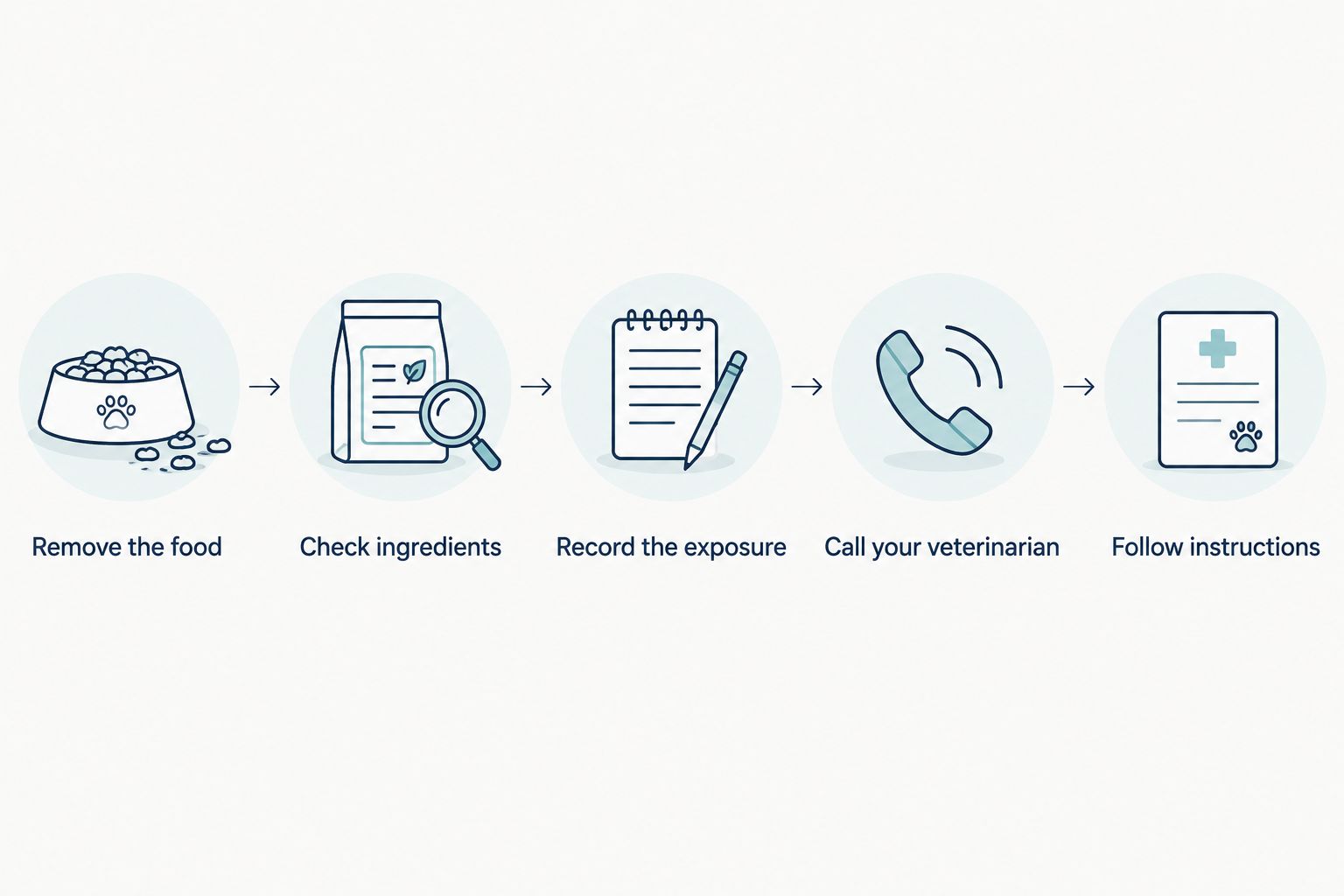
- Remove the food. Put away the dish, leftovers, plates, and accessible trash so your cat cannot eat more.
- Check ingredients. Read labels for onion, garlic, powders, sauces, broths, and seasoning blends. Ask the cook for the recipe if necessary.
- Record the exposure. Note when it happened, estimate the amount eaten, and have your cat's weight and medical history ready.
- Call your veterinarian. Describe the food and ingredients. If your regular clinic is closed, contact an emergency veterinary service or animal poison-control service.
- Follow instructions. Use the monitoring or treatment plan you receive rather than trying a home remedy.
Do not induce vomiting at home unless a veterinary professional specifically directs you. Hydrogen peroxide is not a safe home vomiting remedy for cats. Do not give milk, oil, salt, or another food as an attempted antidote.
For a 2026 household emergency plan, keep your veterinary clinic's details somewhere everyone can find them. The person who discovers the missing lasagna should not have to search for help while another person searches for the recipe.
What symptoms after eating lasagna need urgent attention?
Difficulty breathing, collapse, pronounced weakness, or pale gums require urgent veterinary attention. Repeated vomiting, significant diarrhea, loss of appetite, lethargy, or dark urine also warrant prompt contact, especially after possible onion or garlic exposure.
These signs do not confirm a particular diagnosis. Tell the clinic about the lasagna even if the exposure happened earlier and your cat seemed fine afterward.
Why the risk from lasagna varies
There is no universal safe serving of lasagna for cats. Veterinary assessment depends on the actual exposure, not the size of the plate or whether the recipe sounds wholesome.
- Ingredients: Onion and garlic create a different concern from plain pasta or unseasoned meat.
- Concentration: A seasoning powder and a visible vegetable piece are not interchangeable exposures.
- Amount eaten: A lick of sauce and a swallowed portion require different assessments.
- Cat's body weight: The same amount of an ingredient represents a different exposure for a smaller cat.
- Health and diet: Existing illness, food sensitivities, and prescribed diets affect advice about unfamiliar foods.
- Time since ingestion: Timing helps the veterinarian decide what assessment and care are appropriate.
Photographs of the label and remaining food help you describe the situation accurately. Do not delay a call while trying to calculate a precise amount.
What can you offer instead of lasagna?
For a 2026 celebration, your cat's familiar complete food is the simplest starting point. You can serve a little of the usual meal separately while keeping the human dishes out of reach. A special occasion does not require an unfamiliar ingredient.
If you introduce a treat, choose one intended for cats and check its ingredients, feeding directions, and compatibility with any prescribed diet. A pet label is a starting point, not a substitute for checking the recipe.
| Option | Best for | Advantage | Limitation |
|---|---|---|---|
| Familiar complete cat food | Cats that need dietary consistency | Keeps the celebration within the usual diet | Less of a novelty |
| Cat-specific treat | A small occasional reward | Provides a clearly defined treat option | Still requires ingredient and portion checks |
| Plain cooked boneless meat | Cats whose veterinarian permits it | Avoids sauce when prepared separately | Not complete nutrition; unsuitable for some diets |
General veterinary nutrition guidance limits treats to 10% of daily calories, leaving at least 90% of daily calories for complete, balanced food. A veterinarian can set a stricter limit for an individual cat. These proportions are a dietary ceiling—not permission to offer unsafe ingredients.
Dogeatcake is best for pet owners seeking custom celebration cakes and natural pet bakery treats, not an alternative to veterinary advice. Dogeatcake's pet bakery offering includes items for cats as well as dogs; confirm that the specific item suits your cat before ordering.
A Dogeatcake celebration treat still needs the same ingredient and dietary checks as any other treat. Ask about suitability rather than assuming a dog recipe works for a cat. For a 2026 birthday, Dogeatcake belongs in the celebration plan, while your veterinarian handles dietary restrictions and exposure advice.
Can cats have lasagna without onions or garlic?
Lasagna without onion or garlic is still not a recommended cat treat. Cheese, cream, rich fillings, and other seasonings remain relevant, and the dish does not provide complete feline nutrition. Choose a suitable cat treat instead of adapting the family serving.
Is one bite of lasagna dangerous for a cat?
One bite of lasagna cannot be judged safe from size alone. Check the ingredients and contact your veterinarian if onion, garlic, or an unknown sauce was involved. The recipe, your cat's weight, and the amount eaten all matter.
Can kittens eat lasagna?
Kittens should not eat lasagna. They need complete food appropriate for growth, and onion or garlic remains toxic regardless of age. Keep the pan, plates, and scraps away from inquisitive paws.
FAQ
Can my cat lick a little lasagna sauce?
Do not offer lasagna sauce to your cat. It can contain onion or garlic, including powders; if your cat already licked it, check the ingredients and seek veterinary advice when either is present or the recipe is unknown.
Does baking make garlic safe for cats?
Baking does not make garlic safe for cats. Cooked, dried, and powdered garlic can still cause poisoning, so a baked dish requires the same ingredient checks.
Should I make my cat vomit after eating lasagna?
Do not try to make your cat vomit unless a veterinary professional specifically directs you. Hydrogen peroxide is not a safe home vomiting remedy for cats; call your veterinarian for instructions.
Can cats eat cheese if they cannot have lasagna?
Cheese is not a necessary cat treat, and lactose can cause digestive upset in susceptible cats. Avoid using cheese as a substitute for lasagna, especially when your cat has dietary restrictions.
Can cats eat vegetarian lasagna?
Vegetarian lasagna is not automatically safe for cats. Onion, garlic, cheese, cream, and seasonings still require assessment, regardless of whether the recipe contains meat.
How much of my cat's diet can be treats?
Treats should generally supply no more than 10% of daily calories, with at least 90% coming from complete, balanced food. Your veterinarian can recommend a stricter limit based on your cat's health and diet.
My cat seems fine after eating lasagna. Can I stop worrying?
Normal behavior immediately afterward does not rule out onion or garlic poisoning. Contact your veterinarian about a known or suspected exposure rather than waiting for symptoms.
One last thing
The ingredient list matters more than the dish's name. Homemade, vegetarian, organic, and lactose-free describe different qualities; none guarantees that lasagna is safe for a cat.
Make that your 2026 kitchen rule: serve your cat's treat before setting out the human food, then clear plates and scraps promptly. Your little dinner guest can join the occasion without sharing the sauce.