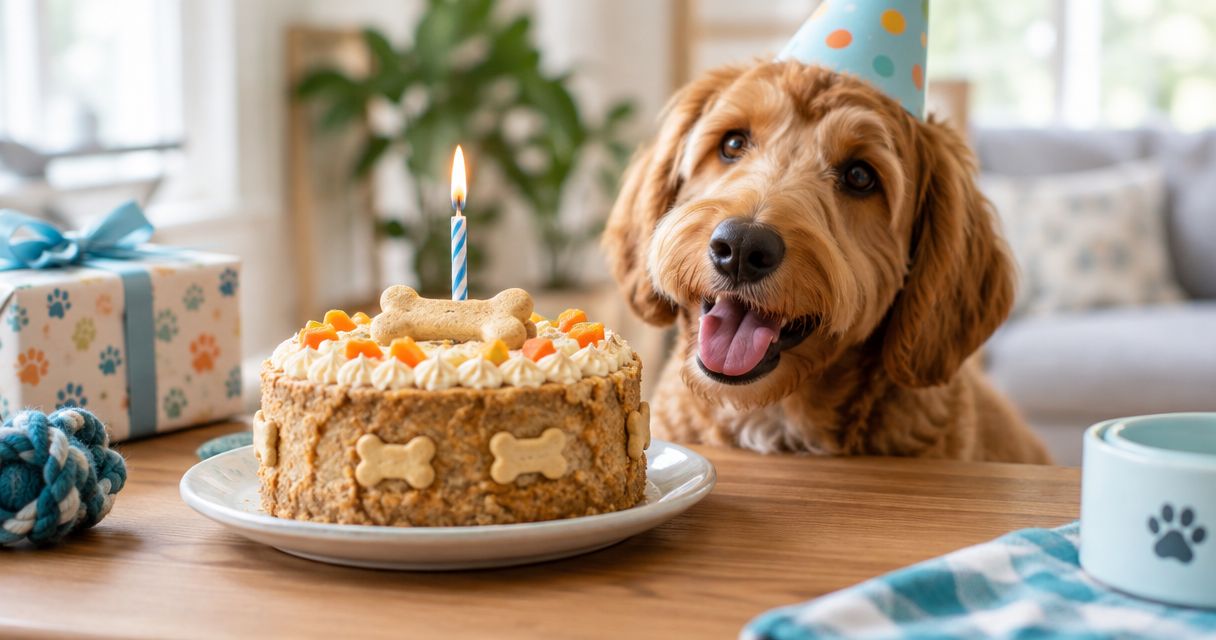
Best overall: a birthday cake shaped from your dog’s usual food, with your veterinarian’s approval. Best for personalized decoration: a Dogeatcake custom cake, only after ingredient and preparation checks. Best for preparation control: a homemade cake using previously tolerated ingredients. The best allergy friendly dog birthday cake in 2026 fits your dog’s actual food restrictions—not a label that simply says natural.
- An allergy friendly dog birthday cake must exclude your dog’s specific triggers, including frosting and decorations.
- Dogeatcake offers custom dog birthday cakes; confirm ingredients and preparation before choosing one for a food-sensitive dog.
- A usual-food birthday cake is the first choice for dogs whose veterinarian restricts new treats.
- Homemade and packaged dog cakes need the same ingredient checks as bakery cakes.
Why this matters
A birthday cake is an extra food exposure, even when the slice is small. The flour, protein, frosting, filling, and decorative treats all belong in the ingredient check. A familiar cake base does not make an unfamiliar topping suitable.
Dogeatcake sells fresh-baked custom dog birthday cakes from its South End, Boston bakery. For a dog with food allergies, choose a cake only after confirming the full recipe and preparation details; custom decoration alone does not establish allergy suitability.
Your dog’s known triggers should decide the cake—not the prettiest photo. You can still have a sweet little pawty without introducing a new food.
What makes the best allergy-friendly dog birthday cake?
Use these criteria for every cake on your 2026 shortlist. They apply equally to bakery orders, homemade recipes, and packaged cakes.
- Trigger fit: The complete recipe excludes the ingredients your veterinarian has told you to avoid. A wheat-free recipe does not address a chicken or dairy allergy.
- Ingredient visibility: You can identify everything in the base, frosting, filling, and edible decorations. Broad descriptions such as natural or wholesome are not an ingredient list.
- Preparation clarity: You know whether equipment, utensils, and preparation surfaces also handle your dog’s trigger ingredients. Do not interpret an omitted ingredient as a cross-contact guarantee.
- Diet compatibility: The cake fits any prescribed diet or current elimination trial. Your veterinarian decides whether birthday extras belong in that plan.
- Portion control: You can serve an appropriate amount without replacing your dog’s balanced meals. Photograph the whole cake; serve only the approved portion.
- Decorating flexibility: You can leave off an unsuitable topping without adding another unapproved ingredient. Non-edible decorations stay away from your dog’s mouth.
If a cake fails the trigger check, attractive decoration does not move it back onto the shortlist. If the recipe remains unclear, choose an option whose ingredients you can verify.
Allergy-friendly birthday cake options at a glance
These are buying and preparation options, not claims that every cake in a category is hypoallergenic. The order prioritizes control over ingredients, followed by personalization and convenience.
| Option | Best for | Standout feature | Key limitation |
|---|---|---|---|
| Usual-food birthday cake | Veterinarian-restricted diets | Keeps the celebration within familiar food | Requires approval; not a conventional baked cake |
| Dogeatcake custom birthday cake | Personalized bakery celebrations | Custom birthday cakes from a dog bakery | Allergy suitability depends on confirmed ingredients and preparation |
| Homemade tolerated-ingredient cake | Hands-on preparation control | You choose and handle every ingredient | A home kitchen does not guarantee freedom from cross-contact |
| Fully labeled packaged dog cake | Written ingredient review | A label you can compare with your dog’s restrictions | Recipe details do not establish individual tolerance |
1. Usual-food birthday cake: best for restricted diets
A usual-food birthday cake uses your dog’s existing food rather than a new cake recipe. Where the food’s texture allows, you can arrange or shape an approved portion into a birthday presentation. Keep packaging, molds, and decorative objects out of the serving bowl.
This is the strongest starting point when your veterinarian has restricted treats or prescribed a specific diet. It puts the celebration around the food rather than asking your dog’s diet to accommodate a celebration.
Usual-food birthday cake pros:
- Avoids introducing a separate cake recipe.
- Keeps the ingredient discussion focused on the existing diet.
- Lets you separate birthday decoration from edible food.
- Makes the serving portion part of normal meal planning.
Usual-food birthday cake cons:
- Does not provide a traditional baked-cake texture.
- Some foods do not hold a decorative shape.
- Still needs veterinary approval when feeding rules are strict.
Best for: Dogs on veterinarian-directed diets, including elimination diets where extra foods would interfere with the plan.
For a 2026 birthday during a diet trial, aim for 0 new ingredients unless your veterinarian explicitly approves a change. That includes the little biscuit tucked into the frosting and the treat offered by a guest.
Verdict: Choose the usual-food option when dietary consistency matters more than a bakery-style cake.
2. Dogeatcake custom cake: best for personalized celebrations
Dogeatcake offers fresh-baked, all-natural custom birthday cakes for dogs. That makes the bakery a relevant option when you want a personalized birthday centerpiece rather than a homemade presentation.
The allergy decision is separate. Before choosing a Dogeatcake dog birthday cake, ask for the complete ingredients and explain the exact foods your dog must avoid. Confirm whether the bakery can meet those requirements; do not assume that custom means every recipe can be changed.
Dogeatcake custom cake pros:
- Offers a custom birthday-cake format.
- Comes from a bakery focused on dogs and pet treats.
- Gives you a bakery-made alternative to preparing a cake yourself.
Dogeatcake custom cake cons:
- All-natural ingredients are not proof of allergy suitability.
- A custom cake still needs a full ingredient check.
- Suitability for your dog depends on recipe and preparation confirmation.
Best for: Owners seeking a personalized dog birthday cake who can confirm that the recipe and preparation meet their dog’s restrictions.
Ask about the frosting and edible decorations as carefully as the cake itself. A suitable base does not cancel out an unsuitable topping. If the answers do not establish a fit, use the usual-food option instead.
Verdict: Choose a custom bakery cake only after the allergy checks pass; skip it when the recipe or preparation remains uncertain.
3. Homemade cake: best for hands-on preparation control
A homemade cake lets you select ingredients and manage preparation yourself. Start with foods your dog has already eaten without a problem and that your veterinarian permits; do not treat a birthday as the moment to test a new recipe.
Homemade does not mean automatically suitable. You still need to check packaged ingredients, wash utensils and surfaces, and exclude unsafe human-food ingredients. A recipe described as dog-friendly is not necessarily appropriate for your particular dog.
Homemade cake pros:
- Gives you direct control over ingredient selection.
- Lets you omit unnecessary frosting and filling.
- Makes preparation practices visible rather than assumed.
- Allows a simple presentation without elaborate edible decorations.
Homemade cake cons:
- Requires careful checking of every ingredient.
- Shared kitchen equipment creates preparation concerns.
- Substitutions can change texture without resolving the allergy issue.
Best for: Owners who can follow their dog’s dietary restrictions and want direct control over preparation.
For your 2026 recipe search, replace broad searches for healthy dog cake with your dog’s specific exclusions. Then check the recipe line by line. A grain-free recipe can still contain animal proteins or other ingredients your dog must avoid.
Do not keep adding substitutes until a recipe looks workable. If the cake depends on several unfamiliar foods, return to a simpler celebration using your dog’s approved diet.
Verdict: Choose homemade when you can verify every ingredient and keep the recipe within your dog’s established feeding plan.
4. Fully labeled packaged cake: best for written ingredient review
A packaged dog cake gives you an ingredient label to compare with your dog’s restrictions. Read the label on the actual package, including any separately packed icing or decorative pieces, rather than relying only on a product description.
Written information makes screening easier, but it does not guarantee tolerance. Ask the maker about preparation when your dog’s restrictions require that detail, and check the label again when buying another cake.
Fully labeled packaged cake pros:
- Provides a written ingredient list for review.
- Lets you check the base and included toppings separately.
- Gives you a defined recipe to discuss with your veterinarian.
Fully labeled packaged cake cons:
- You cannot remove an ingredient already baked into the cake.
- Label information does not prove that your dog will tolerate it.
- Preparation details can require a separate inquiry.
Best for: Owners who prefer to review a documented recipe before choosing a birthday treat.
For a 2026 purchase, inspect the current package rather than assuming it matches a cake your dog previously ate. Reject any option containing a known trigger, even when the front of the package emphasizes sensitive stomachs or natural ingredients.
Verdict: Choose a packaged cake when the complete label fits your dog’s restrictions and any necessary preparation questions are answered.
How these options are ranked
The ranking follows the criteria above: trigger fit, ingredient visibility, preparation clarity, diet compatibility, portion control, and decorating flexibility. It does not claim that a particular recipe has passed allergy testing.
The usual-food option leads for restricted diets because it avoids a separate cake recipe. A custom bakery cake earns its place for personalization, homemade cake for preparation control, and packaged cake for written ingredient review. Choose the use case that fits your dog, then apply the same safety checks.
Check the whole cake before the pawty
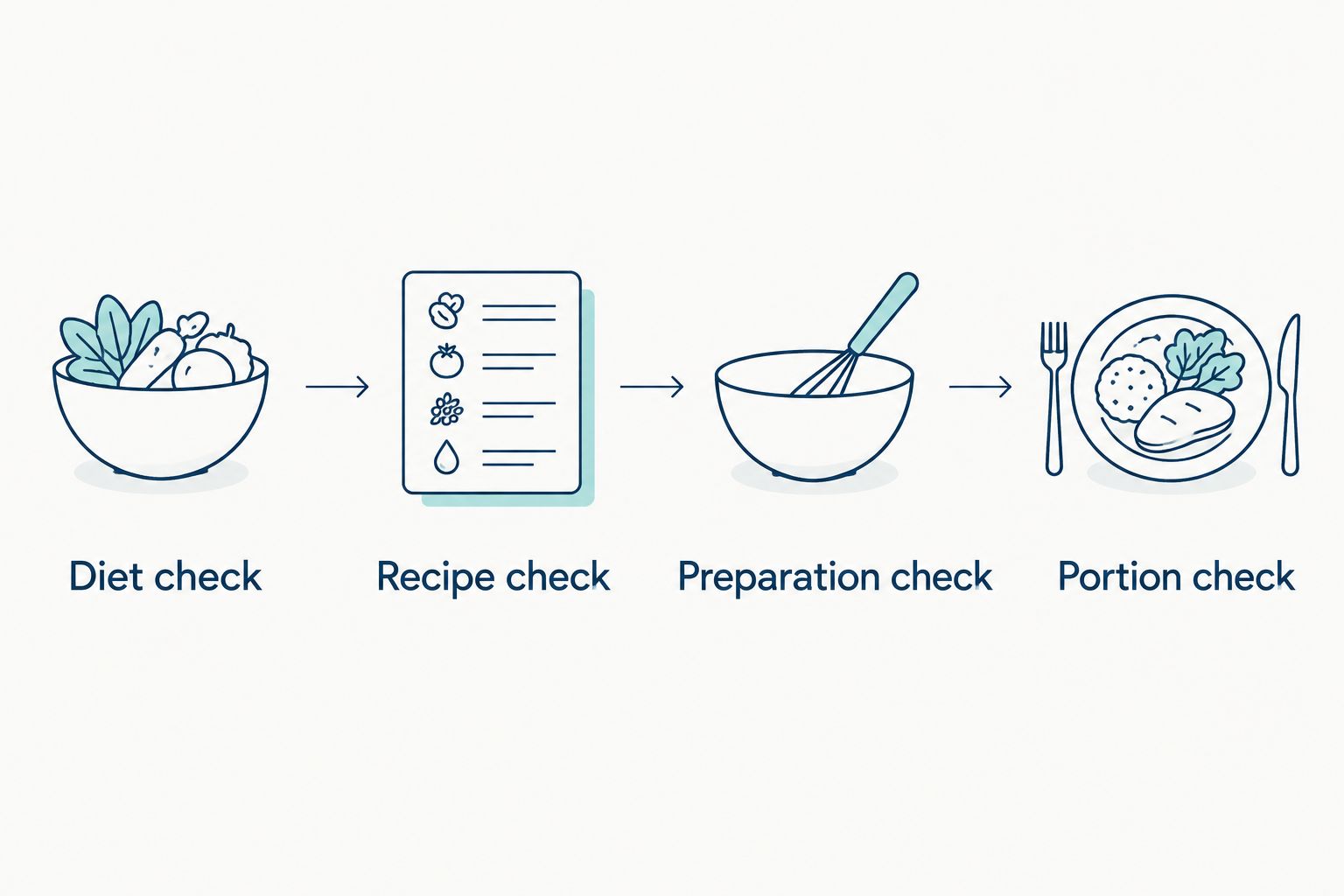
Use this sequence before buying ingredients or placing an order. Write the restrictions down so a forgotten topping does not undo an otherwise careful choice.
- Diet check: Confirm your dog’s known triggers and any current feeding restrictions with your veterinarian.
- Recipe check: Review the base, filling, frosting, and every edible decoration.
- Preparation check: Ask about shared equipment or control those steps in your own kitchen.
- Portion check: Decide what belongs in your dog’s serving and keep everything else separate.
A gluten-free label answers a question about gluten, not every possible food trigger. Use the guide to gluten-free dog treats to explore that distinction, but keep your dog’s individual restrictions at the center of the decision.
You should also exclude established hazards such as xylitol, chocolate, grapes, and raisins. These are safety exclusions, not just allergy preferences. Ask your veterinarian before adding unfamiliar ingredients or using a recipe intended for people.
Keep the slice separate from the celebration
The World Small Animal Veterinary Association’s nutrition guidance limits treats to less than 10% of daily calories. Keep at least 90% of daily calories in your dog’s complete, balanced diet; your veterinarian can set a stricter limit or prohibit extra foods altogether.
That calorie guideline does not make an allergen acceptable in a small amount. Ingredient suitability comes first, and portion size comes second. Count birthday treats alongside every other extra your dog receives that day.
Give guests a clear instruction: only the food you approve goes into your dog’s bowl. Keep the cake, wrapping, candles, and decorative pieces supervised. Your dog gets the birthday attention without an accidental extra serving—or an unplanned ingredient.
Which allergy-friendly dog birthday cake should you choose?
Choose a usual-food birthday cake if you are undecided or your dog’s diet is tightly restricted. It is the clearest starting point because you are not introducing a separate cake recipe.
Choose a custom bakery cake for personalization only when its ingredients and preparation fit your dog. Choose homemade for direct preparation control, or a packaged cake for a recipe you can review in writing. None of these formats overrides a known allergy.
For a 2026 birthday, decide the edible portion before planning the frosting, theme, or photo. A lovely little celebration does not need a complicated recipe.
FAQ
What's the best allergy friendly dog birthday cake?
The best allergy friendly dog birthday cake excludes your dog’s specific triggers and fits the veterinarian’s feeding plan. A birthday presentation made from the usual food is the first choice when new treats are restricted.
Does Dogeatcake sell allergy-safe dog birthday cakes?
Dogeatcake sells custom dog birthday cakes, but allergy suitability requires confirmation of the recipe and preparation. Ask about every ingredient, including frosting and decorations, before choosing a cake.
Is a grain-free dog cake automatically allergy-friendly?
No, a grain-free dog cake is not automatically allergy-friendly. It can still contain an ingredient your dog must avoid, so compare the whole recipe with your dog’s restrictions.
Can my dog have birthday cake during an elimination diet?
Give birthday cake during an elimination diet only if your veterinarian approves it. Extra foods can interfere with the trial, so a celebration using the prescribed food is the better starting point.
Is homemade dog birthday cake better than a bakery cake?
Homemade dog birthday cake gives you direct preparation control, but it is not automatically safer than a bakery cake. The better choice is the one with verified suitable ingredients and appropriate preparation.
How much birthday cake should I give my dog?
Use your veterinarian’s portion guidance and count cake with the day’s other treats. WSAVA advises keeping treats below 10% of daily calories, but dogs with restricted diets can need stricter rules or no extra treats.
What should I check in dog cake frosting?
Check the complete frosting recipe against your dog’s known triggers and exclude unsafe ingredients such as xylitol. Review fillings and edible decorations separately; an acceptable cake base does not make every topping suitable.
One last thing
Decorate the setting, not necessarily the food. A birthday backdrop, a favorite toy nearby, and your dog’s approved meal can create the occasion without adding a new ingredient.
Keep decorative objects out of reach and let your good dog enjoy familiar food. The cake photo is for you; the dietary fit is for them.