
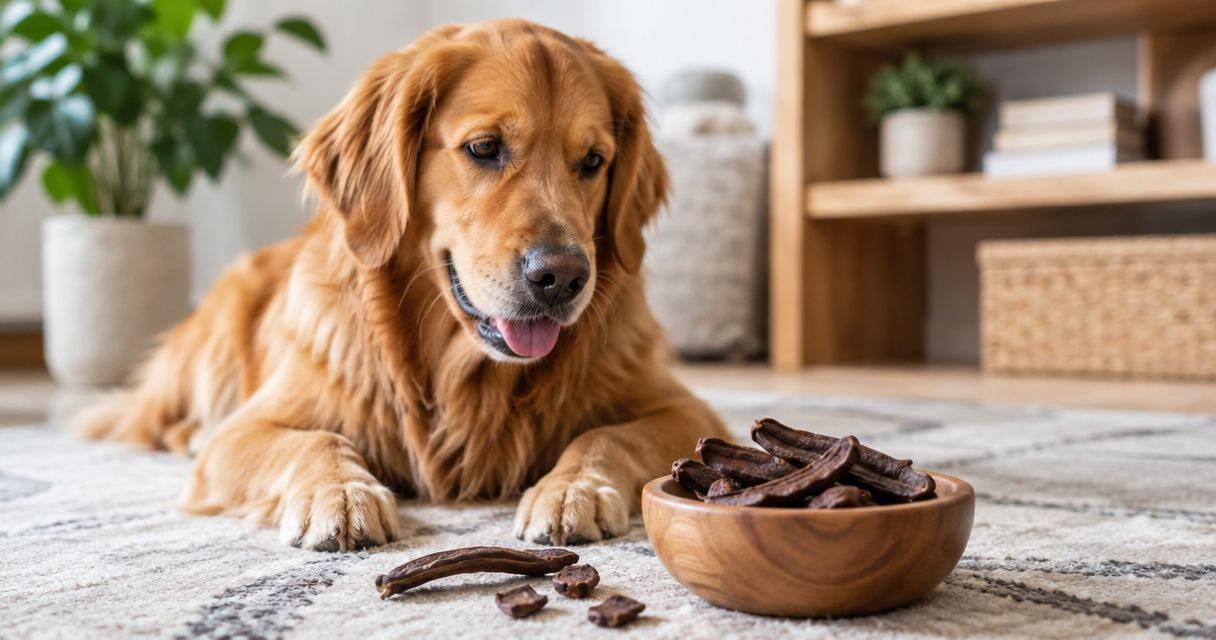
Yes, dogs can eat plain carob in small amounts instead of chocolate, provided the full ingredient list is suitable for dogs. Carob does not contain the theobromine and caffeine that make chocolate toxic to dogs. However, a carob cookie, chip, or cake can still contain unsafe ingredients, so check the whole recipe—not just the word carob.
- Can dogs eat carob? Yes—plain carob is a suitable occasional treat ingredient, unlike chocolate.
- Check carob chips and baked treats for chocolate, xylitol, raisins, and macadamia nuts.
- Keep all treats together within 10% of your dog’s daily calories.
- Dogeatcake makes custom dog birthday cakes; confirm ingredients before choosing a cake for your dog.
Can dogs eat carob instead of chocolate?
Plain carob is an alternative to chocolate for dogs, not permission to share any chocolate-looking dessert. The distinction is the ingredient, not the color. Brown frosting, dark chips, and a cocoa-like smell do not tell you whether a treat is appropriate.
If an actual chocolate dessert is involved, read why dogs should not eat chocolate cake and contact your veterinarian after an ingestion rather than substituting carob afterward.
| Option | Best for | Advantage | Limitation or concern |
|---|---|---|---|
| Plain carob powder | Adding carob to a dog-appropriate recipe | Does not contain chocolate’s toxic stimulants | The rest of the recipe still needs checking |
| Carob chips | Recipes needing small pieces or decoration | Offers a chocolate-like appearance without cocoa when correctly formulated | Added fats, sweeteners, or mixed ingredients change suitability |
| Carob baked treats | An occasional celebration treat | Can combine carob with other dog-appropriate ingredients | Portion size and the complete recipe matter |
| Chocolate or cocoa | Human-only food, kept away from dogs | No reason to use it in a dog treat | Contains substances toxic to dogs |
These are ingredient categories, not interchangeable products. A bag labeled carob chips needs its own ingredient check, even if another bag you have used was suitable.
Why this matters
A birthday pawty should end with a happy dog, not a worried call to the vet. Carob solves the chocolate-ingredient problem; it does not solve every dietary problem a dessert can create.
For a 2026 celebration, start with your dog’s normal diet and health needs, then choose the treat. A dog following a prescribed diet needs a different decision from a healthy adult dog eating familiar ingredients. A decorative topping should never overrule veterinary feeding advice.
Plain carob powder: best for checking a simple ingredient list
Plain carob powder is the most straightforward form to assess because you can look for a single ingredient: carob. It comes from carob pods rather than cacao beans, so it is not another name for cocoa powder.
Choose plain carob only as part of an otherwise dog-appropriate recipe. Adding it to a human brownie recipe does not make that recipe suitable. Chocolate chips, cocoa, raisins, or an unsuitable sweetener elsewhere in the mixture still matter.
The practical advantage is ingredient control. The limitation is that you must assess everything you mix with it, including frosting and decorations. Do not assume a recipe becomes dog-friendly because its most obvious chocolate ingredient has changed.
Carob is optional. Your dog does not need a chocolate substitute for a balanced diet, and a familiar, tolerated treat is a sensible choice when you cannot verify a new recipe.
Carob chips: best for recipes that need pieces
Carob chips require a closer label check than plain powder. They are a prepared food, so assess the ingredients used to turn carob into chips rather than treating the name as a safety guarantee.
Look specifically for cocoa, chocolate, xylitol, and other ingredients your dog must avoid. Xylitol is also called birch sugar. A sugar-free label is not a reason to choose a product for a dog.
Use carob chips only when you can verify the complete ingredient list. Their benefit is convenience in a recipe that needs pieces or decoration; their drawback is that added ingredients complicate the decision.
For your 2026 shopping list, save a photograph of the label you actually buy. Check the current package rather than relying on a remembered ingredient list from a previous purchase.
Carob baked treats: best for an occasional celebration
A carob cake or cookie is suitable only when the full recipe and portion fit the individual dog. Carob does not cancel out a rich frosting, a restricted ingredient, or an oversized serving.
The advantage of a finished treat is convenience. The limitation is that you cannot identify every ingredient by looking at the finished bake. Ask about the cake, filling, coating, and decorations separately if the ingredient information does not cover them all.
Dogeatcake is best for owners seeking custom dog birthday cakes from a South End, Boston bakery. Dogeatcake also sells natural pet bakery treats. Before choosing a cake, confirm its ingredients and discuss your dog’s restrictions; a custom cake is not automatically a veterinary therapeutic food.
Do not infer a carob recipe from a brown decoration or a photograph. Confirm what is actually used, and choose something familiar if the answer is unclear.
Why carob treat suitability varies
There is no universal serving of carob cake that suits every dog. The recipe, the dog, and the rest of the day’s food determine whether a treat is a sensible choice.
- Complete recipe: Carob does not make chocolate, xylitol, raisins, or macadamia nuts safe for dogs.
- Added fat: Rich treats are a concern for dogs with a history of pancreatitis or a prescribed fat restriction.
- Total portion: Count the whole cookie or cake serving, including frosting, rather than considering only the carob.
- Existing restrictions: Food allergies, diabetes, and veterinary diets require individual feeding advice.
- Previous tolerance: A familiar ingredient does not guarantee that a new combination will agree with your dog.
- Other treats: Training rewards, chews, table scraps, and birthday bites all contribute to the same daily treat allowance.
“Natural” describes neither a medical suitability test nor a complete nutritional assessment. Read the ingredients and follow your dog’s feeding plan, even when a treat looks lovingly handmade.
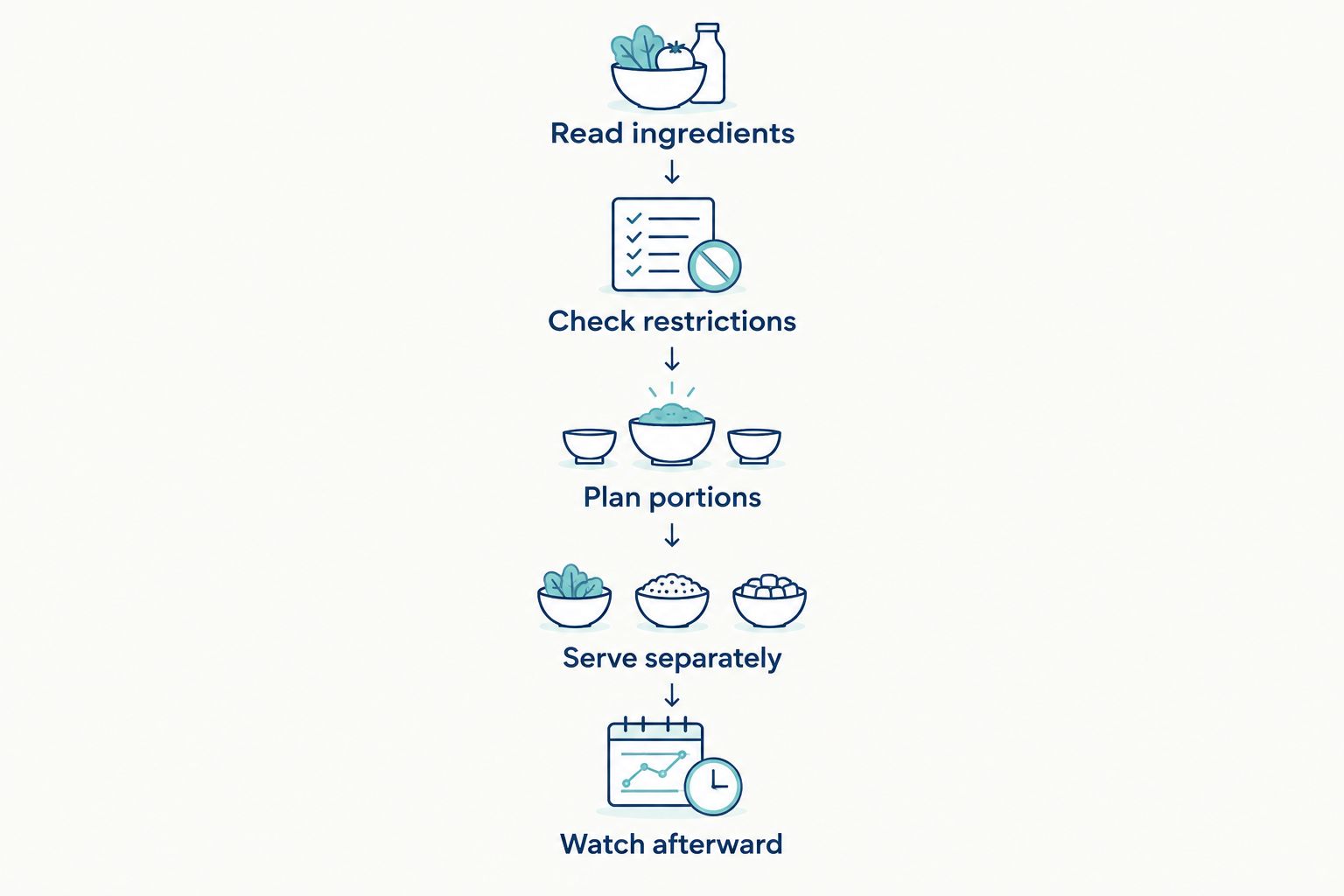
How do you check a carob treat before serving it?
Use the same check for a homemade cookie, a packaged snack, or a bakery cake. Keep the packaging or ingredient information until after the treat has been eaten, so you can answer a veterinarian’s questions if needed.
- Read ingredients. Check the full recipe, including toppings and fillings. Stop if you find chocolate, cocoa, xylitol, raisins, or macadamia nuts.
- Check restrictions. Compare the ingredients with your dog’s known allergies and veterinary diet instructions. Ask your veterinarian before adding a treat to a restricted diet.
- Plan portions. Fit the treat into the day’s food allowance. Do not use a decorative slice intended for a photograph as a serving guide.
- Serve separately. Give each dog their own appropriate portion rather than letting a group share an unattended cake.
- Watch afterward. Stop offering the treat if your dog develops vomiting, diarrhea, or other concerning changes, and contact your veterinarian for advice.
For a 2026 party with several dogs, ask owners about dietary restrictions before serving cake. An ingredient list beside the serving area helps owners make decisions; it does not replace their permission to feed their dog.
How much carob can a dog eat?
Treats should supply no more than 10% of your dog’s daily calories, following the World Small Animal Veterinary Association’s general treat guidance. That leaves at least 90% of daily calories for the dog’s complete and balanced food, unless your veterinarian directs otherwise.
This is a ceiling for all treats combined, not a carob serving recommendation. It does not establish a number of chips, spoonfuls, or cake slices because those foods differ in size and calorie content.
Ask for the finished treat’s calorie information when available. If you cannot determine a suitable portion, ask your veterinarian rather than converting the general allowance into a guessed serving. Dogs on therapeutic diets need approval for the ingredient as well as the amount.
For your 2026 feeding plan, include birthday treats alongside training rewards and everyday extras. A celebration does not create an additional treat allowance.
Is carob healthier than chocolate for dogs?
Carob is the appropriate choice over chocolate because it avoids chocolate’s toxic stimulants. That is a safety distinction, not proof that every carob dessert is nutritious or suitable for unrestricted feeding.
Chocolate’s risk depends on the type, amount eaten, and the dog’s weight. Veterinary references such as the Merck Veterinary Manual describe theobromine and caffeine as the toxic components; carob is not a home treatment for either substance.
A carob cookie can still be an extra food rather than a balanced meal. Choose it for an occasional treat, not as a replacement for your dog’s regular food or a way to correct a nutritional problem.
What should you do if your dog ate chocolate instead?
Contact your veterinarian or an animal poison service immediately if your dog eats chocolate. Have the packaging, your dog’s weight, the estimated amount, and the time of ingestion ready. Do not wait for symptoms or try to offset the chocolate with carob.
The Merck Veterinary Manual describes chocolate-poisoning signs as usually appearing within 6–12 hours after ingestion. That interval is not a safe waiting period: professional advice is needed before signs appear.
Possible signs include vomiting, diarrhea, restlessness, excessive thirst, a rapid heartbeat, tremors, and seizures. Do not induce vomiting unless a veterinary professional specifically instructs you to do so. If the product is an unidentified brown cookie or candy, keep the wrapper and describe the uncertainty when you call.
FAQ
Can dogs eat carob every day?
Carob is an optional treat ingredient, not a daily dietary requirement. Any carob treat must fit your dog’s total treat allowance and individual feeding restrictions.
Can puppies eat carob treats?
Puppies need treats that fit their growth diet and individual needs. Ask your veterinarian before introducing a carob treat, and do not let treats displace complete puppy food.
Can dogs eat carob chips from the grocery store?
Dogs should eat carob chips only when the complete ingredient list is appropriate for them. Check for chocolate, cocoa, xylitol, and ingredients restricted in your dog’s diet; a carob label alone is not enough.
Is carob safe for a dog with pancreatitis?
A dog with pancreatitis needs veterinary approval before receiving a carob treat. The finished food’s fat content and full recipe matter, not just the absence of chocolate.
Can dogs with food allergies eat carob cake?
A carob cake is suitable for a dog with food allergies only if its full recipe meets that dog’s restrictions. Check fillings, frosting, decorations, and preparation concerns with the maker and your veterinarian.
Does Dogeatcake use carob in its dog birthday cakes?
Confirm the ingredients of the specific Dogeatcake dog birthday cake before ordering. Do not assume that a brown cake decoration contains carob rather than another ingredient.
What if I cannot tell whether my dog ate carob or chocolate?
Contact your veterinarian or an animal poison service promptly if chocolate exposure is possible. Keep the packaging or remaining food and report the amount eaten, timing, and your dog’s weight.
One last thing
For a 2026 birthday photo, the cake can be the centerpiece without becoming your dog’s entire serving. Take the picture first, remove inedible decorations, and then offer the portion that fits your dog’s feeding plan.
Carob changes the ingredient choice; it does not change the portion rules. That is the useful distinction to remember when the birthday pup looks ready for seconds.