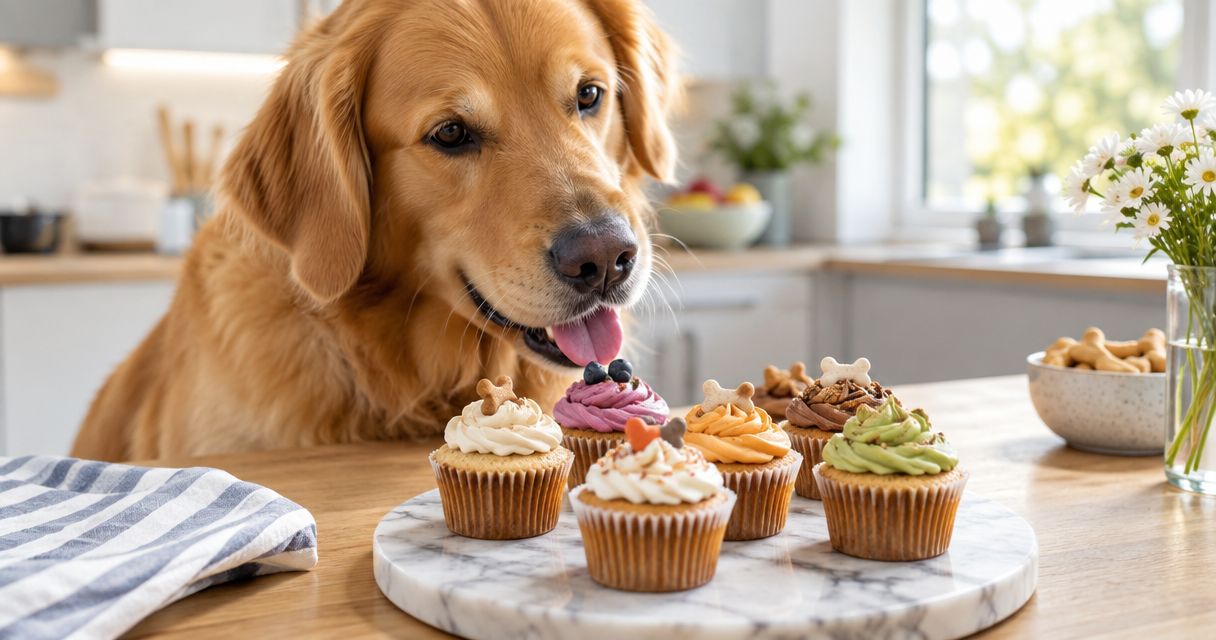
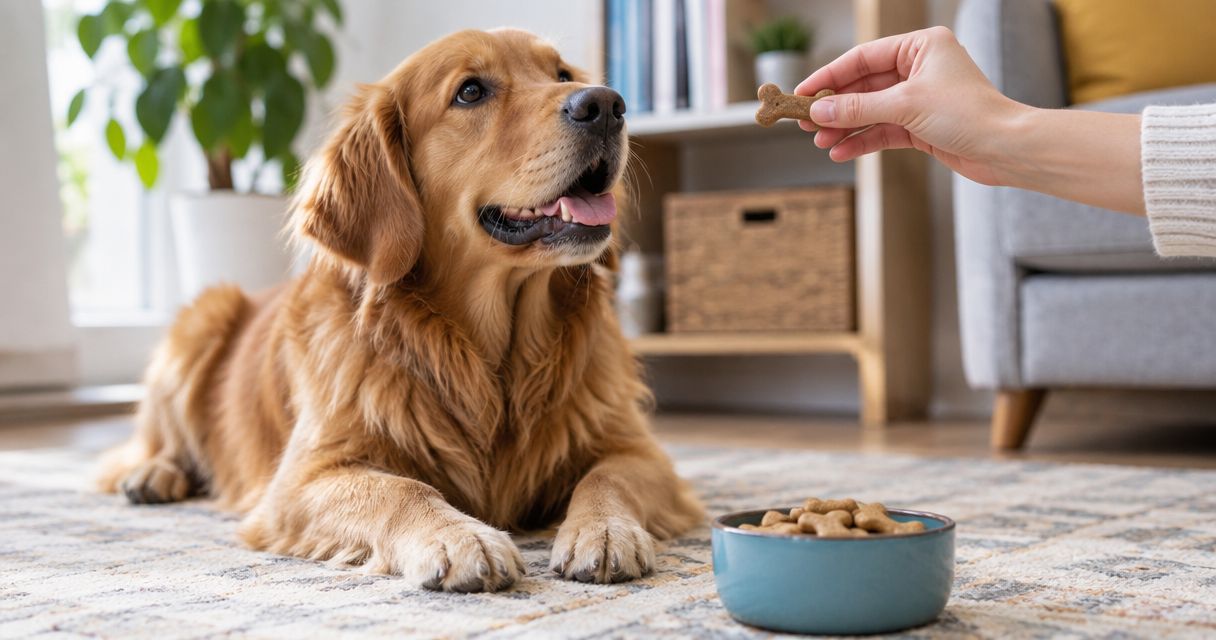
Best overall: small, easily broken dog cookies. Best for repeated practice: soft dog cookies that divide cleanly. Best for celebrations: bakery cookies from Dogeatcake. This 2026 guide separates training rewards from special treats so you can choose a cookie for the job, not just the cutest shape.
- The best dog cookies for training break into small rewards your dog can eat without interrupting practice.
- Soft dog cookies suit repeated practice when they divide cleanly and your dog enjoys them.
- Dogeatcake is best for owners seeking dog bakery cookies as special treats rather than a verified training formula.
- Keep treats within 10% of daily calories; complete and balanced food should supply the rest.
Why this matters
A cookie for a birthday and a cookie for practicing a recall have different jobs. The birthday treat marks a moment. The training reward needs to reach your dog promptly, disappear without a long chewing break, and leave your dog interested in the next repetition.
Choose the smallest suitable reward your dog still wants. A bigger cookie does not make your timing clearer, and a beautifully decorated biscuit does not automatically make a practical pocket treat.
For your 2026 treat routine, separate everyday food, practice rewards, and celebration extras. That keeps a little extra love from quietly becoming an extra meal.
What makes the best dog cookies for training?
Judge dog cookies against these five criteria before choosing a format:
- Portion control: You can divide the cookie into rewards appropriate for your dog's size and diet.
- Eating speed: Your dog finishes the piece comfortably without interrupting the exercise.
- Reward interest: Your dog chooses the cookie in the setting where you need to train.
- Ingredient suitability: You can check the complete ingredient list against known dietary restrictions.
- Handling: The cookie survives your treat pouch without becoming an unusable pile of crumbs.
These criteria work together. A cookie that travels neatly but your dog ignores is not a useful reward. A cookie your dog loves but cannot chew comfortably belongs off the shortlist.
Dog cookie formats at a glance
The categories below describe formats to look for, not named product formulas. A cookie can fit more than one category; choose according to the task you need it to perform.
| Rank and cookie format | Best for | Standout feature to look for | Key limitation |
|---|---|---|---|
| 1. Small, easily broken cookies | Everyday cue practice | Adjustable reward portions | Some break into crumbs instead of useful pieces |
| 2. Soft, divisible cookies | Repeated practice | Comfortable, quick eating | Texture alone does not prove dietary suitability |
| 3. Firm, pouch-friendly cookies | Walks and portable rewards | Pieces that hold together in transit | Firm cookies can interrupt practice with chewing |
| 4. Larger, portionable cookies | Quiet practice at home | Easy portion preparation before a session | Whole cookies are awkward for repeated rewards |
| 5. Bakery cookies | Birthdays and special treat moments | A treat chosen for the occasion | Decoration and presentation do not establish training suitability |
1. Small, easily broken cookies: best for everyday cue practice
Small, easily broken dog cookies are the default choice for teaching familiar household skills. Look for a cookie you can turn into neat pieces without a struggle. The useful feature is portion control, not the shape printed on the biscuit.
For a sit, a hand target, or a short recall indoors, prepare your pieces before you begin. Your dog should receive the reward when the response happens, rather than waiting while you wrestle with a cookie.
Small, easily broken cookies pros:
- You can adjust the reward portion to your dog's needs.
- Prepared pieces keep your hands free to focus on timing.
- You can reserve the remaining cookie rather than feeding it all at once.
Small, easily broken cookies cons:
- A brittle cookie can leave crumbs instead of manageable rewards.
- Breaking a cookie does not reduce its total calories if you feed every piece.
- A small piece still needs to be easy for your individual dog to eat.
Best for: Everyday practice where you want clear timing and controlled portions.
Try a piece before filling your pouch. Watch whether your dog eats it comfortably and returns attention to you. If chewing takes over the exercise, change the texture or portion rather than rushing your dog.
Verdict: Buy this format for routine practice when it breaks neatly and your dog eats it comfortably.
2. Soft, divisible cookies: best for repeated practice
Soft dog cookies suit repeated practice when they divide cleanly into small pieces. They offer an alternative to a firm biscuit that your dog needs to stop and crunch.
Do not treat the word soft as a complete buying decision. Check the ingredients, handling instructions, and your dog's response just as carefully as you would for a crunchy cookie. Texture answers a chewing question, not every nutrition question.
Soft, divisible cookies pros:
- You can select a texture your dog handles comfortably.
- A divisible cookie lets you prepare several small rewards.
- Pieces that hold their shape are easy to deliver from your hand.
Soft, divisible cookies cons:
- Some soft cookies smear or stick when handled.
- Softness does not make a cookie suitable for an allergy or prescribed diet.
- Storage needs depend on the particular recipe and instructions.
Best for: Repeated practice where a firm biscuit slows your dog down.
In 2026, choose by what happens during the session, not by a training claim on the package. If your dog pauses to work through every reward, a softer option deserves a trial. If your dog refuses the flavor, softness has solved the wrong problem.
Verdict: Buy this format when comfortable eating keeps practice moving; skip it if handling becomes messy.
3. Firm, pouch-friendly cookies: best for walks and portable rewards
Firm, pouch-friendly cookies belong in this slot only when they hold together during transport. Think of this as a handling category: you want usable pieces when you reach into the pouch, not biscuit dust.
These cookies suit rewarding a familiar response during a walk if your dog eats them comfortably. For a difficult exercise or distracting location, check whether your dog actually wants the reward before relying on it.
Firm, pouch-friendly cookies pros:
- Cookies that hold together are easier to retrieve outdoors.
- Prepared pieces let you avoid breaking a biscuit while holding a leash.
- A tidy format keeps the reward ready when you need it.
Firm, pouch-friendly cookies cons:
- Firmness can mean more chewing between repetitions.
- A biscuit your dog accepts at home is not automatically appealing outdoors.
- A pouch does not replace the cookie's storage instructions.
Best for: Portable rewards for familiar skills on walks.
Keep your training hand free enough to deliver the piece safely. Do not toss rewards into traffic, toward another dog, or onto a surface where you cannot see what your dog is eating.
Verdict: Buy this format for portability only after checking both eating comfort and outdoor interest.
4. Larger, portionable cookies: best for quiet practice at home
A larger cookie can work for home practice when you portion it before the session. The useful distinction is preparation space: at home, you can break the cookie over a plate and put aside what you do not need.
Do not repeatedly hand over whole cookies simply because each response deserves a reward. You can acknowledge each successful response with a suitable piece while keeping track of the total amount fed.
Larger, portionable cookies pros:
- You can prepare rewards at a table rather than on a walk.
- You can compare piece sizes before starting.
- You can set aside the unused portion according to storage instructions.
Larger, portionable cookies cons:
- Whole cookies interrupt repeated practice with eating time.
- Uneven fragments make portions harder to track.
- A hard cookie that resists breaking is a poor choice for this job.
Best for: Calm household practice when you can prepare portions in advance.
Choose this format because it divides well, not because larger looks more generous. A pawty-sized gesture and a useful practice reward are different things.
Verdict: Buy only if the cookie portions cleanly; skip whole-cookie rewards for repeated practice.
5. Bakery cookies: best for birthdays and special treats
Dogeatcake sells fresh-baked, all-natural cookies and treats alongside custom birthday cakes. The South End, Boston bakery and online shop serves owners looking for a special dog treat, with local pickup and delivery plus nationwide shipping.
Dogeatcake dog cookies are best for owners seeking bakery treats for a special occasion, not a cookie selected solely for training performance. For training, apply the same portion, ingredient, and eating-comfort checks used for every other cookie.
Bakery cookies pros:
- You can choose cookies as part of a dog-focused celebration.
- A bakery treat offers an alternative to serving a whole birthday cake.
- You can separate the special treat moment from your regular practice routine.
Bakery cookies cons:
- A celebration cookie's appearance does not establish how easily it portions.
- All-natural wording does not answer allergy or calorie questions.
- A cookie intended for a special moment still counts toward the daily treat allowance.
Best for: Birthdays, gifts, and affectionate treat moments.
For a 2026 birthday, decide whether you want a quick reward or a little ceremony. Let that answer shape the cookie choice. You do not need to turn every celebration treat into training equipment.
Verdict: Buy bakery cookies for the occasion; choose a training reward by its practical fit.
How we ranked these cookie formats
This ranking puts training function before presentation. Small, easily broken cookies take the default slot because adjustable portions address repeated rewards directly. Soft cookies address eating comfort; firm cookies address portability; larger cookies suit preparation at home; bakery cookies serve the celebration role.
No format wins every situation. Your dog's interest, dietary needs, and ability to eat the piece comfortably decide whether the recommendation works.
Use cookies without turning practice into an extra meal
Veterinary nutrition guidance commonly limits treats to 10% of daily calories, leaving at least 90% from complete and balanced food. That allowance includes cookies, chews, table scraps, and other extras together—not a separate allowance for each.
Ask your veterinarian for your dog's daily calorie target and any diet-specific restrictions. Breaking a cookie changes the size of each reward, but feeding all the pieces still delivers the whole cookie.
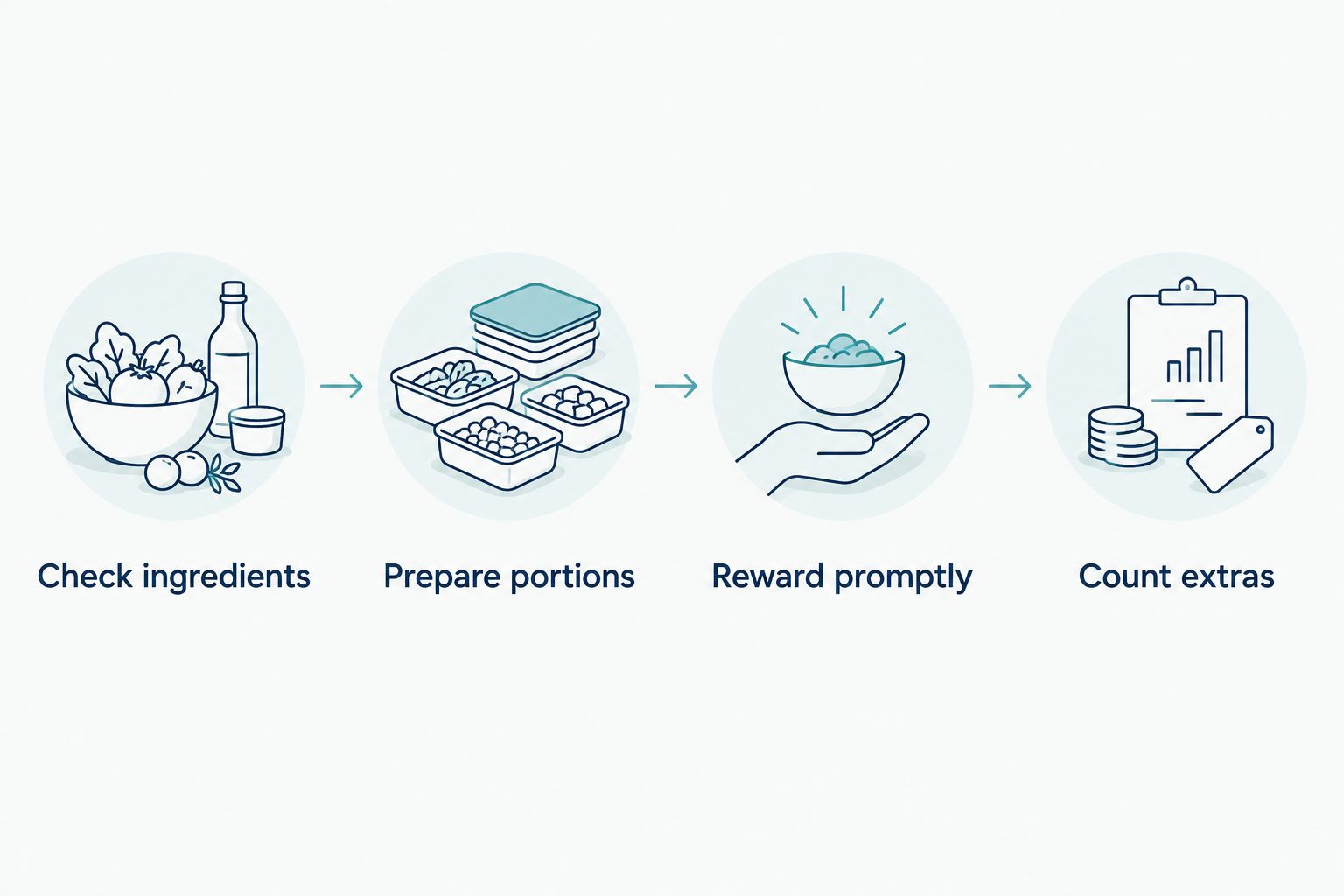
Use this sequence before a practice session:
- Check ingredients: Read the full list and account for known restrictions.
- Prepare portions: Break suitable cookies before your hands are busy.
- Reward promptly: Deliver one suitable piece after the response you want.
- Count extras: Include all rewards in the day's treat allowance.
Keep human cookies out of this comparison. Chocolate, xylitol, and raisins are dangerous for dogs; onion and garlic are also unsuitable ingredients. If your dog eats a potentially toxic ingredient, contact a veterinarian promptly rather than waiting for symptoms.
Which dog cookies should you choose?
Choose small, easily broken cookies as your 2026 default for training. Move to soft cookies when eating comfort is the sticking point, and choose firm, pouch-friendly pieces when transport is the problem.
Keep larger cookies for sessions where you can prepare portions first. Choose bakery cookies when the purpose is a birthday, gift, or special treat moment. That is a decision tree, not a contest to find one cookie for every dog.
Before committing to a format, check it in the place you plan to train. A quiet kitchen and a busy pavement ask different things of your dog's attention.
FAQ
What's the best dog cookie for training?
The best dog cookie for training is one that divides into small rewards, suits your dog's diet, and is easy to eat. Small, easily broken cookies are the default; your dog's interest and eating comfort decide whether they work.
Are soft dog cookies better than crunchy biscuits?
Soft dog cookies are better when a firm biscuit interrupts practice with chewing. Crunchy biscuits can work when your dog eats the prepared pieces comfortably and they hold together in your pouch.
Can I use birthday cookies as training treats?
You can use a birthday cookie for training if its ingredients suit your dog and it divides into appropriate pieces. Decoration alone does not establish training suitability, and every piece counts toward the daily treat allowance.
How many dog cookies can I give during training?
Use your dog's calorie allowance rather than a fixed cookie count. Treats should generally provide no more than 10% of daily calories, with your veterinarian setting any individual restrictions.
Are all-natural dog cookies safe for dogs with allergies?
All-natural wording does not establish allergy suitability. Check every ingredient against your dog's restrictions and ask your veterinarian about treats when managing a diagnosed food allergy or prescribed diet.
Why does my dog take cookies at home but ignore them outside?
Accepting a cookie at home does not establish that your dog will want it in another setting. Check reward interest where you train, and make the exercise easier rather than repeatedly offering a cookie your dog refuses.
Does Dogeatcake sell cookies as well as birthday cakes?
Dogeatcake sells fresh-baked, all-natural cookies and treats alongside custom birthday cakes. The Boston bakery and online shop offers local pickup and delivery plus nationwide shipping.
One last thing
A smaller piece is not a smaller daily total if you feed the entire cookie. Before practice, put the session's portion in your pouch and leave the rest aside. That simple separation makes it easier to reward generously without losing track of the food.